
Statement by Toivo Klaar, EU Ambassador to Uzbekistan, on commemoration of 4 years of Russian war of Aggression against Ukraine
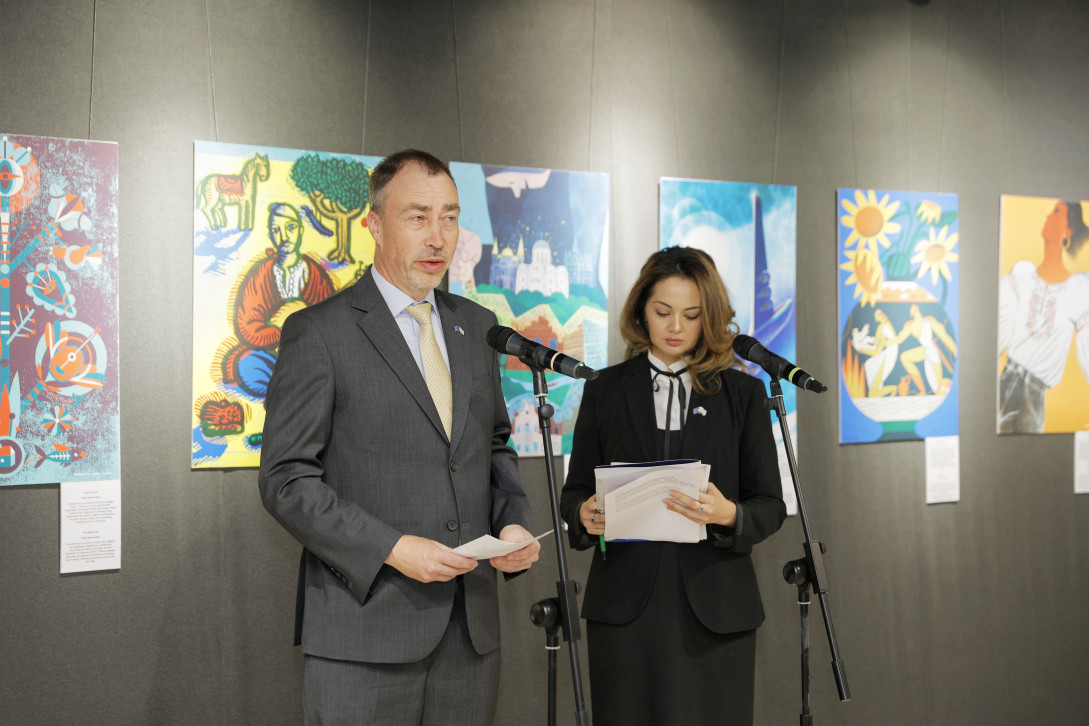
Excellencies, dear colleagues, dear fellow friends of Ukraine,
Thank you for joining us here as we commemorate the start of Russia’s full-scale invasion of Ukraine, four years ago today. Standing here together with representatives of the Ukrainian embassy, EU member states, and likeminded partners, we show that we stand united and determined as Ukraine enters the fifth year of Russia’s war. I am also grateful to the Ilhom Theatre for hosting this exhibition free of charge.
Ladies and gentlemen, over the last four years, the Ukrainian people have endured daily attacks on their homes, their schools, their infrastructure, and their cultural heritage. Every day, Ukrainian mothers lose their sons and daughters to Russian bullets and bombs. And yet, every day Ukrainians stand up to repair, readapt, and rebuild.
After four years of such atrocities, let 2026 be the year this war comes to an end. Ukrainians continue to show incredible resilience while facing constant brutality; they deserve peace.
The EU’s position is crystal clear. We want peace in Ukraine, and we want this peace to last. It must be durable, credible, and consistent with international law. It must also be based on justice and underpinned by credible security guarantees, as history shows that weak or rushed deals only embolden aggressors.
Ukraine has demonstrated time and time again that it is ready for peace. It has sought a ceasefire, even as its own cities burn. In this endeavour, the European Union stands fully behind Ukraine and is actively contributing to the US-led peace efforts because for us it is clear: the kind of peace that follows this unprovoked war of aggression will determine not only the fate of Ukraine, but also the fate of Europe.
And yet, while Ukraine and its allies seek peace, Russia answers diplomacy with missiles. In the end, we are looking at a simple truth: the war in Ukraine can end tomorrow if Russia withdraws its troops from Ukraine’s territory and ceases its aggression. As we speak, Russia is weaponising winter and continues its attacks on the Ukrainian people and their livelihoods, while Ukraine and its partners call for a ceasefire and genuine peace talks.
Through its failure to defeat a much smaller neighbour Russia has proven that it is not invincible. The bravery of the Ukrainian people and armed forces have proven that. But the Kremlin’s brazen disregard of international laws and norms has created instability for its neighbouring countries, and the broader international community, not to speak of the destruction it has wrought on Russia’s domestic economy that will have a long-term effect on the well-being of the Russian people.
This war affects the entire world, and particularly the countries that are geographically close to Russia. It strikes at the very heart of the principles which matter to us all, and which are enshrined in the UN Charter. Respect for sovereignty, territorial integrity, and the peaceful settlement of disputes are essential for the security of all states, and it is exactly these fundamental principles that Russia is undermining in Ukraine. Russia’s pursuit of war has also disrupted global food and energy markets, and has had a grave impact on global stability and prosperity.
The way this war ends is therefore important to us all. If aggression is rewarded, sovereignty and territorial integrity become hollow phrases and might will make right. If Russia can change borders by force in Ukraine, it will be tempted to do so elsewhere - and others will be tempted to try that too. That is why not only Ukraine, but the entire world, needs a just and lasting peace in Ukraine.
The European Union remains the largest supporter of Ukraine, politically, economically, militarily, and diplomatically, while remaining open to any credible path toward a just and lasting peace. We are with you every step of the way, and you will always find a reliable and stable partner in the EU.
Dear guests,
I now would like to warmly invite you to take a look at the exhibition set up around us, which reflects on how Ukraine’s future, past and present are connected through Ukraine’s cultural heritage. It makes a simple point: Ukraine and Ukrainian culture and identity are here to stay, whatever some imperialist ideologues may say or think.
I also encourage you to watch the documentary “Us, Our Pets and the War” by Anton Ptushkin. It tells stories of soldiers and volunteers, Ukrainians and foreigners, who risk their lives to rescue animals. It is a story not only about war, but about humanity, compassion, and the extraordinary bond between people and animals - a bond that, in the darkest moments, reminds us that sometimes it is not we who save the animals, but it is they who save us.
Thank you, and Slava Ukraini!