
Uzbekistan Scales Up the “Islands of Integrity” Approach with EU and UNDP Support
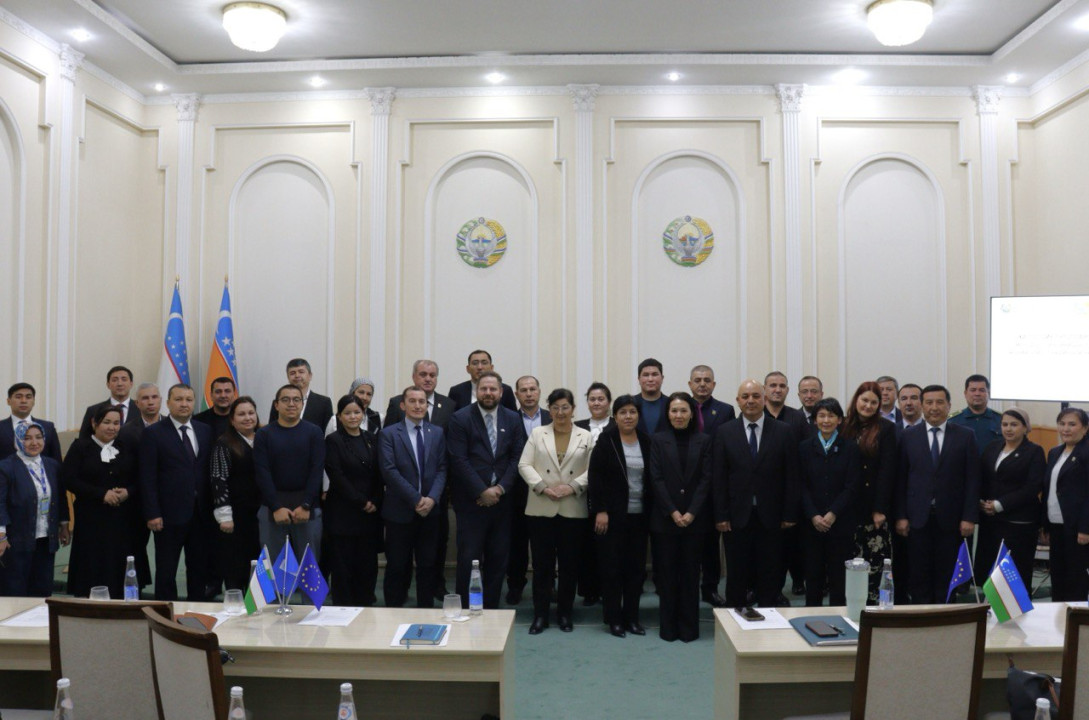
The launch took place in Turtkul District and brought together national and international partners, including the Chairperson of the Committee on Judicial and Legal Issues and Combating Corruption of the Jokargy Kenes of the Republic of Karakalpakstan Atajanov Alisher, Deputy Director of the Anti-Corruption Agency Umida Tukhtasheva, Khokim of Turtkul District Ilkhomboy Khudaibergenov, UNDP Resident Representative in Uzbekistan Akiko Fujii, and Head of the Cooperation Section of the European Union Delegation to Uzbekistan Christos Marazopoulos.
The second phase follows the initial implementation of the methodology in 2024–2025, when it was piloted in Vobkent District, Jizzakh City, and Mirzo-Ulugbek District. During this first phase, local authorities worked together through a series of structured workshops to identify corruption risks in the most vulnerable areas of public administration, review internal procedures, and agree on practical solutions suited to local realities. As a result, each pilot area developed its own Strategic Roadmap and Action Plan for 2025–2026, outlining concrete steps to reduce corruption risks in everyday government work. Because these plans were developed by local officials themselves, they are grounded in real practice and supported by strong local ownership.
Building on this experience, Uzbekistan is now expanding the approach to six additional districts in 2026: Hazorasp District (Khorezm Region), Konimekh District (Navoi Region), Jomboy District (Samarkand Region), Oltiarik District (Fergana Region), Pap District (Namangan Region), and Turtkul District (Republic of Karakalpakstan). The goal is to apply lessons learned from the pilot phase and make integrity-based practices part of daily work in local administrations.
With financial support from the European Union and in close partnership with the Anti-Corruption Agency and the National Anti-Corruption Council, UNDP has adapted the methodology to Uzbekistan’s context and trained a national group of anti-corruption practitioners who will support implementation across regions. The expanded phase will focus on improving internal procedures, strengthening public oversight, and encouraging greater public participation in corruption prevention at the local level.
Background: The “Islands of Integrity” anti-corruption methodology is an internationally recognized approach that has been applied in 11 Central, Eastern, and South-Eastern European countries and more than 30 local governments. It received the UN Public Service Award in 2011 and is taught at institutions such as the International Anti-Corruption Academy in Vienna and the Hague Academy for Local Governance. Rather than focusing only on punishing individuals, the methodology helps local governments identify weaknesses in their systems and introduce practical, locally driven solutions. In Uzbekistan, it is implemented under the joint project of the Anti-Corruption Agency and UNDP, “Strengthening the National Anti-Corruption Ecosystem in Uzbekistan”, funded by the European Union.