
EU energy and climate diplomacy – strengthening sovereignty and advancing the global clean transition

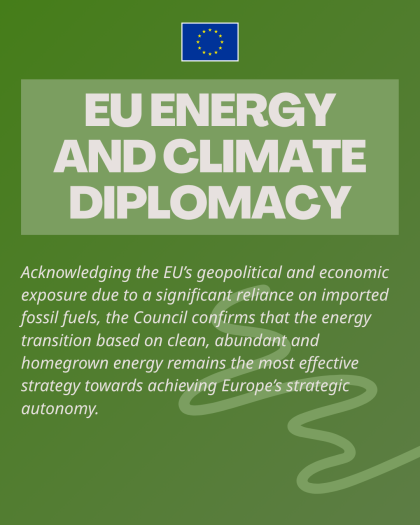
Energy security risks and the existential threat of climate change endanger the EU’s sovereignty. The Russian war of aggression against Ukraine and hostilities in Iran and the Middle East have demonstrated again: the EU’s security, competitiveness, and strategic autonomy depend on the clean transition allowing us to break fossil fuel dependencies and to address the climate crisis.
To respond to this growing threat, the Council today approved conclusions on ‘EU energy and climate diplomacy – strengthening sovereignty and advancing the global clean transition.’
EU High Representative for Foreign and Security Policy Kaja Kallas, referred to the Council conclusions on energy and climate diplomacy in her press remarks at the Foreign Affairs Council:
"The wars in the Middle East and Ukraine show how important it is to diversify supplies and reduce dependencies on fossil fuels."
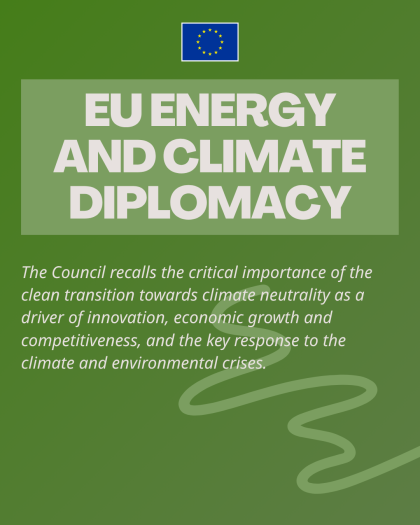
The clean transition benefits EU economic security and competitiveness by reducing the dependence on volatile fossil fuel imports – thereby increasing energy security. The clean transition further acts as a driver of innovation, economic growth and competitiveness globally. Its technological innovations can further boost EU defence readiness. EU foreign policy can advance the clean transition by promoting European clean technology solutions across the globe. In view of this, the Council welcomes the Joint Communication on the EU Global Climate and Energy Vision (2025), in which the EU High Representative for Foreign and Security Policy and Commission had laid out a set of priorities for strategic international energy and climate engagement.
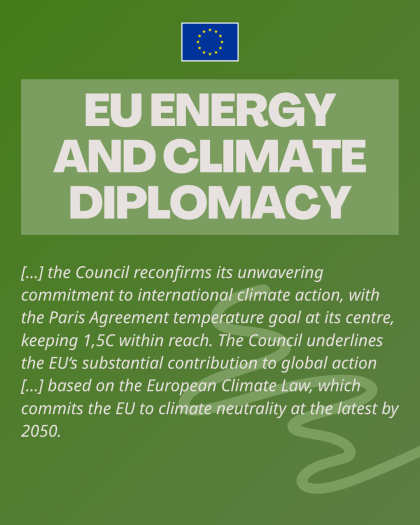
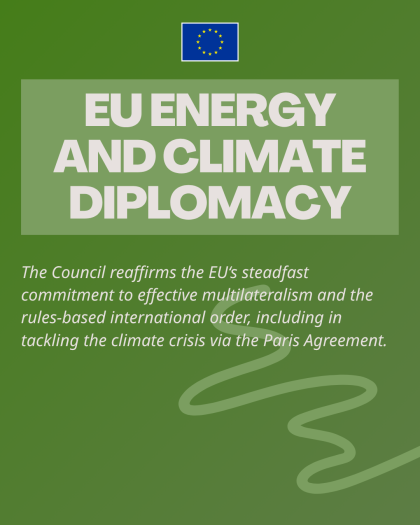
The EU will continue to lead on global climate action under the Paris Agreement to fight global warming and keep the 1.5 Celsius temperature goal within reach. The EU has ambitious domestic climate targets and is the world’s largest provider of climate finance. On this basis, we will keep engaging partners and deepen cooperation: building partnerships to advance the global clean transition and build resilience against climate change.
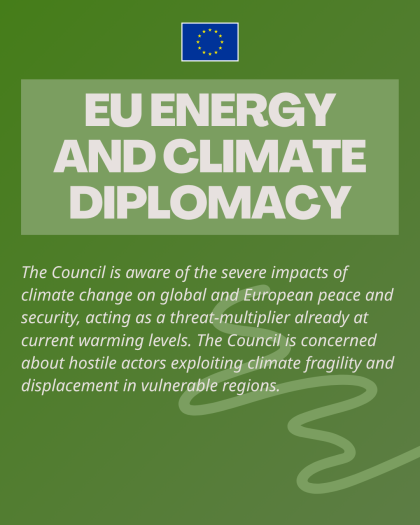
The climate crisis is a threat to global and European peace and security, driving fragility and displacement. EU foreign, security and defence policy will do its part to mitigate the crisis and adapt to its impacts.
Highlights from the Council Conclusions
-
Image
EU
-
Image

EU
-
Image
EU
-
Image
EU
-
Image
EU
-
Image
EU