
EU military capabilities explained
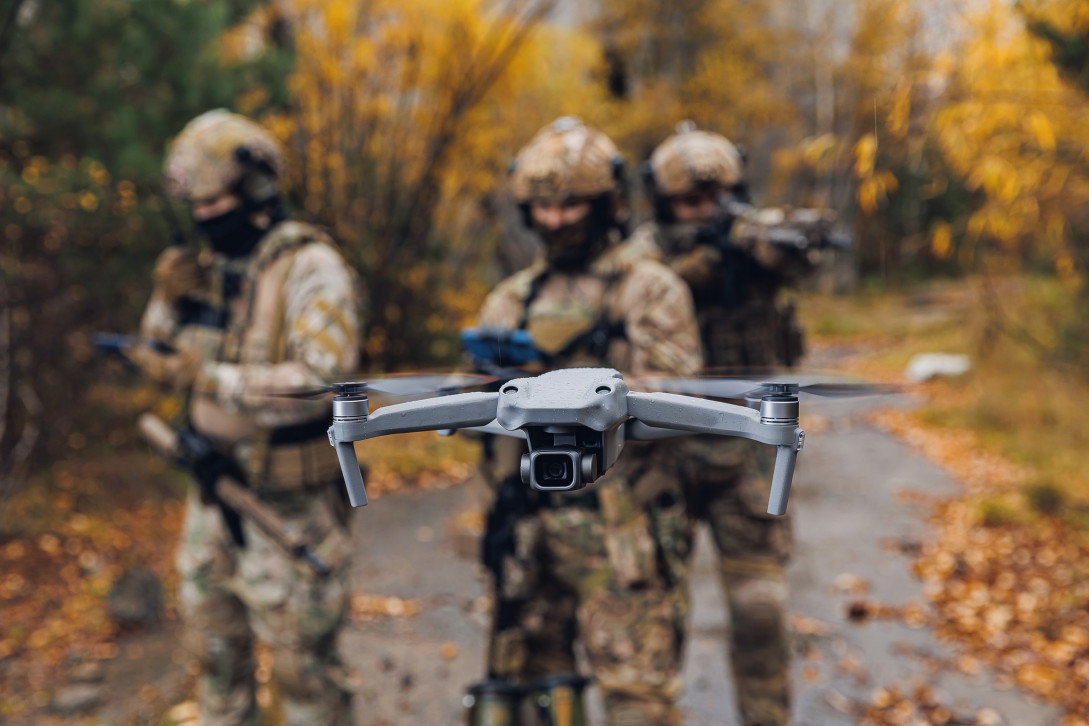
This is why European defence readiness is all about developing and mastering the capabilities we need, in order to be able to react to evolving threats. From hybrid and cyber-attacks against Member States to air space violations or at sea, and addressing security consequences of climate change: it is about being ready to protect European security.
What are “military capabilities”?
Military capabilities are the resources, systems and expertise that allow a country to ensure security and to respond effectively when needed. This includes not only equipment and technology, but also trained personnel, logistics, maintenance, planning and operational know-how. Together, these elements constitute the core of defence, making it possible to protect people, borders, networks and assets by land, air, sea, in cyberspace and in outer space.
Why are we working to strengthen our capabilities?
Today, Europe is facing growing threats to its security. The evolving threat landscape means that Europe has to make hard choices about its future. EU Member States need to be ready to protect our way of life and our shared democratic values.
After decades of under-investment into defence, considerable additional funding into our capabilities - our ability to act - is needed to ensure that Europe’s armed forces and defence systems are ready if needed. This includes replenishing existing stocks and developing and acquiring new capabilities adapted to the modern battlefield.
Stronger armed forces also contribute to deterring adversaries who would like to ‘test’ us. A stronger European pillar within NATO (23 out of 27 EU Member States are also NATO allies) also contributes to the deterrence of the Alliance.
What is the EU doing to help Member States develop their capabilities?
Member States are and will remain responsible for their own national security and defence. However, by working together, EU Member States can address existing shortfalls, especially those that are beyond the reach of a single Member State. The EU is proposing a way ahead and facilitating funding to facilitate this process, using the existing frameworks for common decision making and coordination.
The High Representative for the Union’s Foreign Affairs and Security Policy, Kaja Kallas, and the European Commission have proposed a number of actions to strengthen European defence readiness: the White Paper on European Defence and the Roadmap for Defence Readiness 2030. Together with Member States, security and defence experts at the EEAS, the European Defence Agency and the European Commission are working on their implementation.
The EU Defence Readiness Roadmap calls on Member States to invest more, invest together and invest within Europe. It sets out clear objectives and milestones to achieve defence readiness by 2030 at the latest. Among the key priorities put forward, the Roadmap outlines ways to address critical military shortfalls, notably through setting up “Capability Coalitions” led by Member States. It also proposes “European Readiness Flagship” projects to Member States, with a view to addressing urgent needs collectively and decisively.
What are European Readiness Flagships?
European Readiness Flagships are proposed pan-European projects across multiple areas of military capabilities. The European Commission and the EU High Representative have proposed to EU Member States an initial set of priority projects to invest a coordinated manner:
- The European Drone Defence Initiative and the Eastern Flank Watch
The European Drone Defence Initiative aims to create a flexible, agile and state of the art European capability to counter unmanned aerial vehicles at the EU’s borders – especially in the East. It would include multi-domain surveillance systems, drone and counter-drone capabilities, electronic warfare capabilities, precision strike systems, and responsive operational coordination. The Eastern Flank Watch flagship would build on this system and build up capacity of Member States on the Eastern border to face a wide range of threats.
- A European Air Shield
This proposed project would create an integrated, multi-layered air and missile defence shield over Europe. This Shield aims to be fully interoperable with the NATO command and control system and doctrine.
- A European Space Shield
This proposed project would set up a comprehensive European system of space capabilities. These are needed to facilitate secure communication, navigation, observation and many more functions to serve defence purposes. The European Space Shield would build on the existing EU space systems and national capacities.
What are the Capability Coalitions?
The aim of the Capability Coalitions is coordination among Member States to tackle their defence shortfalls jointly. Driven by Member States, these coalitions allow groups of Member States to jointly identify priorities, pool resources, and develop new defence capabilities, in full complementarity with NATO’s ongoing work.
The coalitions are designed to coordinate national investment in priority areas, with every Member State deciding their own role and contribution independently. The European Defence Agency and the European External Action Service, including EU Military Staff, support this work. In addition, Ukraine has the opportunity to be involved in any relevant capability coalition. This will help Member States to get insights and lessons learned from Ukrainian battlefield experience and innovation successes to benefit European defence.
Member States have identified nine initial priority capability areas:
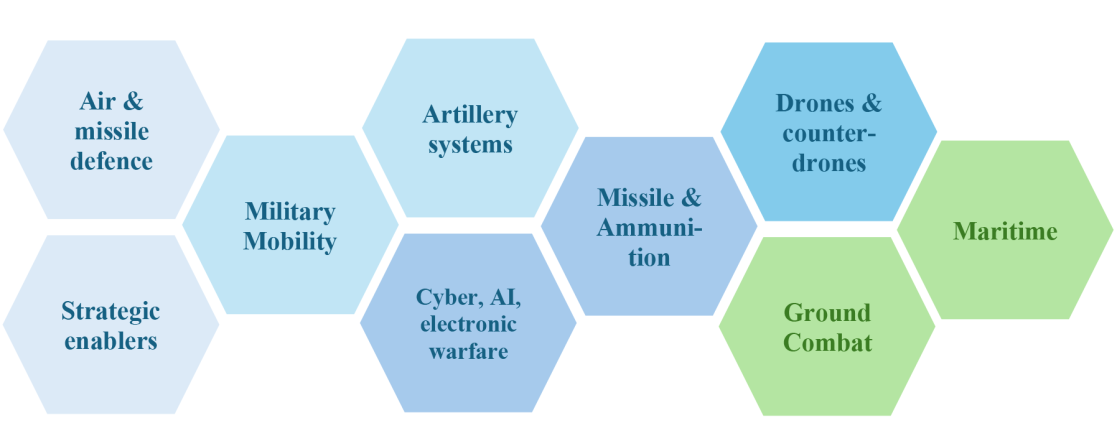
European Union, 2025
How is the EU working with NATO on improving defence capabilities?
A stronger EU and a stronger NATO are mutually reinforcing. As highlighted in the White Paper for European Defence, critical capability shortfalls were identified by both the EU and NATO. The EU’s efforts to address those shortfalls and build the indispensable capabilities will help (the 23) EU Member States that are NATO members to deliver on their NATO capability targets faster, more cost-effectively, and with enhanced interoperability. This will strengthen the European contribution to NATO’s deterrence and collective defence.
In turn, close EU-NATO coordination is essential to strengthen European defence. Enhanced EU-NATO cooperation, whose principles are outlined in the 2023 Joint Declaration, contributes to a more efficient use of resources and makes the transatlantic bond stronger.
NATO remains the cornerstone of collective defence of its members in Europe.