
EU steps up coordination to strengthen international action for Ukrainian civilian detainees
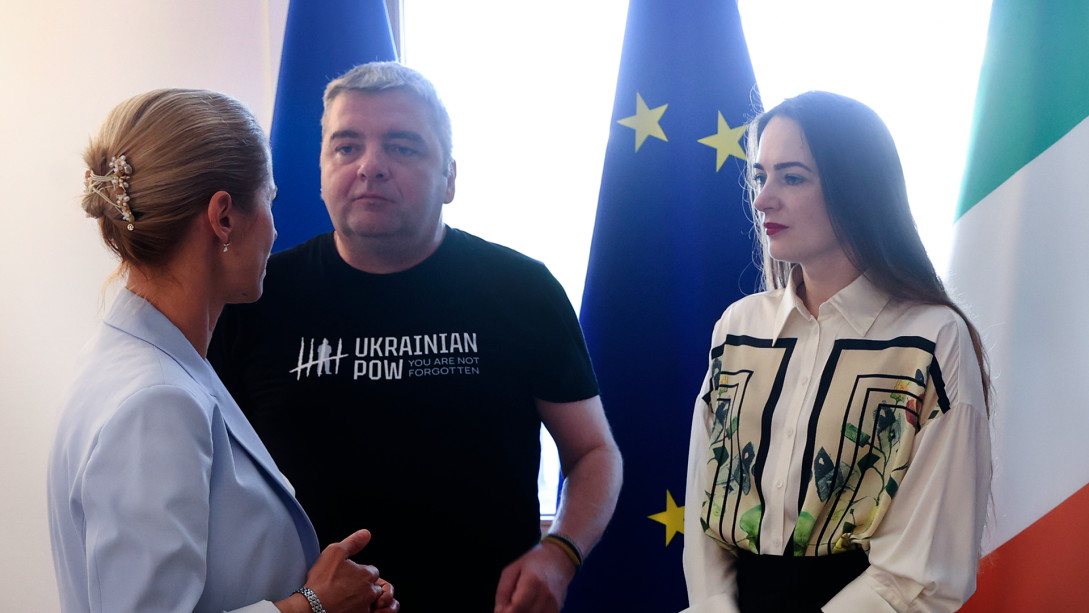
Against the backdrop of Russia's continued arbitrary detention of thousands of Ukrainian civilians, the European External Action Service (EEAS) will strengthen support for detainees and their families.
The EEAS and the EU Special Representative for Human Rights will carry forward coordination with Ukraine, civil society and NGOs, EU Member States and international partners to identify concrete actions in support of Ukrainian civilians arbitrarily detained by Russia.
The announcement follows the adoption of a Joint Statement by the High Representative on behalf of the European Union and Ukraine, reaffirming the EU's commitment to securing the release of Ukrainian civilians unlawfully detained by Russia and to ensuring accountability for violations of international humanitarian and human rights law.
Bringing greater international attention to civilian detainees
According to Ukrainian authorities, around 16,000 Ukrainian civilians are currently detained by Russia, many originating from the temporarily occupied territories of Ukraine. Unlike prisoners of war, civilian detainees are not covered by an international legal mechanism for exchanges under the Geneva Conventions, making international coordination and sustained diplomatic efforts all the more important.
Voices from those who witnessed Russia's abuses
The launch of the platform comes alongside testimonies from two leading voices documenting the human cost of Russia's occupation.
Nobel Peace Prize laureate Oleksandra Matviichuk, head of the Center for Civil Liberties, describes how civilians living under Russian occupation face enforced disappearances, torture, sexual violence, the suppression of Ukrainian identity and the deportation of children. She underlines that people must remain at the centre of international efforts, and action cannot wait:
We must return the human dimension into all political processes. People must be first. Without the human dimension, we would never find a path to sustainable peace.
People are dying in the Russian prisons. We must act immediately.
Former prisoner of war and human rights defender Maksym Butkevych, who was held by Russian forces before being released in October 2024, recounts systematic torture, fabricated criminal charges and inhumane detention conditions. Drawing on his own experience alongside civilian detainees, he stresses the importance of international attention:
The most important thing is to know that you are not forgotten... that there are people who fight for your release.
Oleksandra Matviichuk is one of the most prominent human rights defenders in Ukraine striving to achieve a full democratic transition and ensure justice. As Chairwoman of the Center for Civil Liberties (CCL), she and the organisation have been instrumental in strengthening Ukrainian civil society and national institutions for over a decade, while also pushing to further the rule of law and adherence to international law. Their work of documenting war crimes and human rights violations is paving the way to accountability, gaining increasing importance. Read more about Oleksandra Matviichuk here.
Maksym Butkevych is a co-founder of the Zmina Human Rights Centre and Hromadske Radio. Despite his lifelong pacifism, he volunteered for the Ukrainian Armed Forces at the start of the 2022 Russian invasion and became a platoon commander. Captured and sentenced to 13 years in prison by Russian forces, he endured over two years of harsh imprisonment before being released in a prisoner exchange in October 2024. He remains a powerful symbol of courage and resilience in defence of justice and freedom. Read more about Maksym Butkevych here.