
Humanitarian action: driving reform to protect aid access and address fragility

As humanitarian crises deepen worldwide, the EU is bringing together humanitarian, diplomatic and political tools to safeguard humanitarian access and uphold humanitarian principles.
Today, almost 240 million people worldwide, twice as many as two decades ago, require humanitarian assistance. From Sudan to Gaza, from Ukraine to the Sahel, humanitarian organisations are struggling to reach people in need. Access is shrinking, humanitarian workers are increasingly targeted, and international humanitarian law is under mounting pressure.
Against this backdrop, the High Representative and the Commission are putting forward a new strategic framework to bring together humanitarian, diplomatic and political tools to protect aid access, defend humanitarian principles and respond to increasingly fragile and contested environments.
In a global humanitarian system facing cuts and shortfalls, the EU and its Member States remain the world’s largest and most reliable donors. With our new approach to humanitarian diplomacy, we will make better use of every tool at our disposal to safeguard aid delivery, secure humanitarian access, protect civilians, and ensure respect for international humanitarian law. It will also help ensure that humanitarian issues are front and centre in our external action.
EU High Representative Kaja Kallas
Humanitarian diplomacy: protecting humanitarian space
The Communication “Defending values, driving reform, delivering impact: the EU’s humanitarian action in a shifting global order” introduces a new strategic approach to EU humanitarian diplomacy.
The Commission services and the EEAS will work in close coordination to mobilise their political and diplomatic weight in support of humanitarian principles and international humanitarian law. The new approach will combine diplomatic outreach on the ground with a reinforced Team Europe approach.
Actions will include political and human rights dialogues, peace mediation efforts, coordination in multilateral forums, and stronger partnerships with international organisations and donors. The EU will step up measures to protect the safety of humanitarian workers throughout the full cycle — from strengthened prevention of security incidents to improved care for victims. EU Common Security and Defence Policy (CSDP) missions and operations will also contribute to humanitarian access and the protection of civilians.
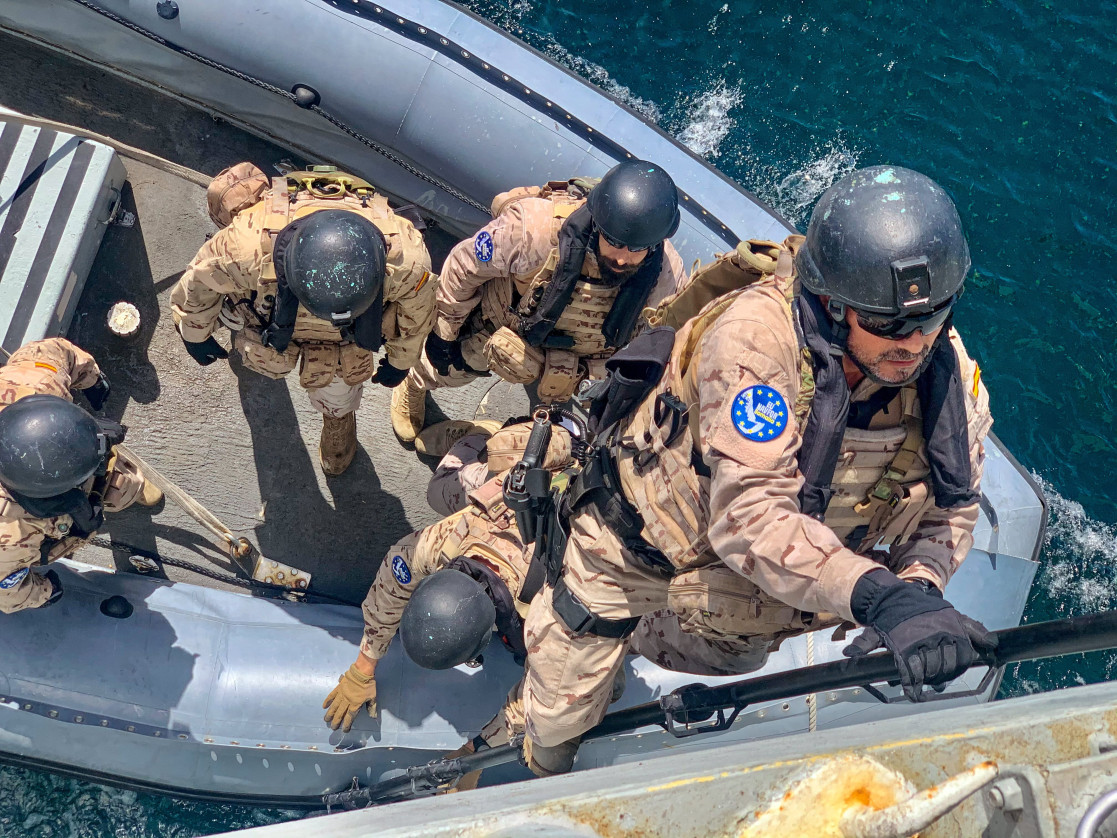
The work of Missions and Operations, such as EUNAVFOR Operation ATALANTA, provide the EU with a flexible operational tool to help shape the EU’s strategic approach to humanitarian action set out in the new Communication.
EU naval operations: protecting humanitarian aid at sea
EEAS
In December 2024, following attacks in the Bab-el-Mandeb Strait, the EU naval operation escorted a World Food Programme vessel carrying wheat to Yemen, ensuring its safe passage through the high-risk area and arrival at the port of Aden without incident. Protecting humanitarian shipments is one of the core tasks of Operation EUNAVFOR ATALANTA, which since 2008 has helped secure around 2,500 vessels transporting more than 3,300,000 tonnes of food assistance to the Somali ports.
Reforming humanitarian delivery
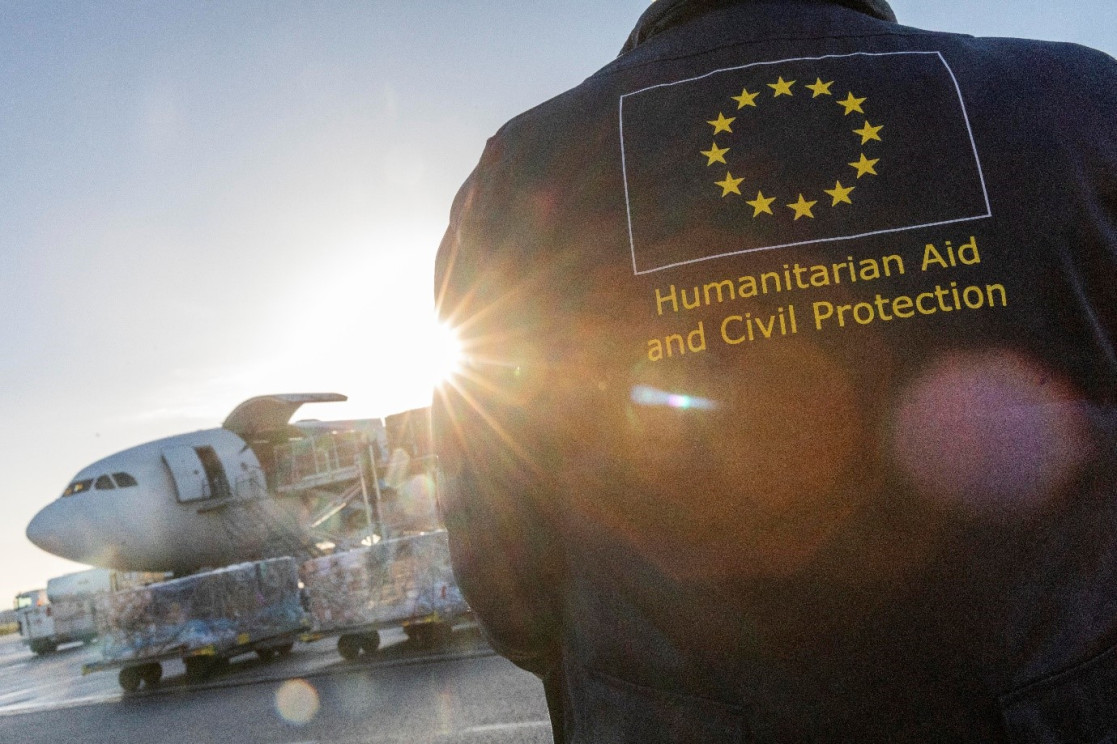
With humanitarian needs reaching record levels and resources becoming increasingly constrained, the EU also wants to improve the efficiency and impact of humanitarian assistance. The Communication outlines a long-term effort to reform humanitarian supply chains — from procurement to delivery on the ground — to ensure that more resources reach affected populations directly.
The new approach also promotes more flexible and efficient ways of delivering aid, including anticipatory action, cash assistance and simplified funding processes for humanitarian partners. Improving coordination and reducing administrative burdens will be key to maximising the impact of limited resources.
European Union, 2024
Addressing fragility
Beyond emergency response, the Communication also places emphasis on fragility as a strategic challenge requiring a more integrated EU response. Globally, fragility is on the rise, with potential spill-over effects for EU’s and our partners’ security. Conflict, economic instability, climate pressures and weak governance increasingly overlap, often turning vulnerable situations into protracted humanitarian crises.
To address these multidimensional challenges, the EU will strengthen cooperation by better combining humanitarian, development and peace tools through an Integrated Approach to Fragility and by enhancing its partnerships. The objective is to increase impact and agility on the ground by taking into account the rapidly evolving geopolitical realities, linking rapid interventions to recovery and longer-term resilience. There is clear value in EU staying engaged in fragile contexts before crises deepen further, thus helping build resilience, support stability and peace, and reduce humanitarian needs in the longer term.
Defending multilateralism in a changing global order
The Communication underlines the EU’s commitment to remain a strong defender of multilateralism and of the rules-based international order at a time when humanitarian principles are increasingly challenged globally.
As other actors scale back their engagement in the humanitarian field, the EU intends to continue supporting the multilateral humanitarian system, notably through close cooperation with the United Nations and international humanitarian partners.
For more information
Joint Communication on Humanitarian Aid
Joint Staff Working document: a strategic approach to EU's Humanitarian Diplomacy
Commission Staff Working document: Humanitarian Supply Chains
Joint Staff Working document: Integrated Approach to Fragility
Europe as a reliable partner
Follow the link to learn more about Europe's Offer and discover stories reflecting the core principle of EU foreign policy: lasting stability is built through reliable partnerships.
