
Shoulder to Shoulder: Advancing Self-Sustainability Through Cooperation
It begins in the field.
In realistic tactical scenarios, veteran soldiers of the Forças Armadas de Defesa de Moçambique (FADM) test doctrine against operational reality. The model is diagnostic and adaptive: it identifies gaps, aligns training with current threats, and focuses precious time on what matters most. Experience gained in combat is not set aside, it is valued, refined, and reinvested.
The objective is clear: more preparation, greater readiness, and a stronger response to terrorism in Cabo Delgado.
But regeneration in the field alone is not enough.
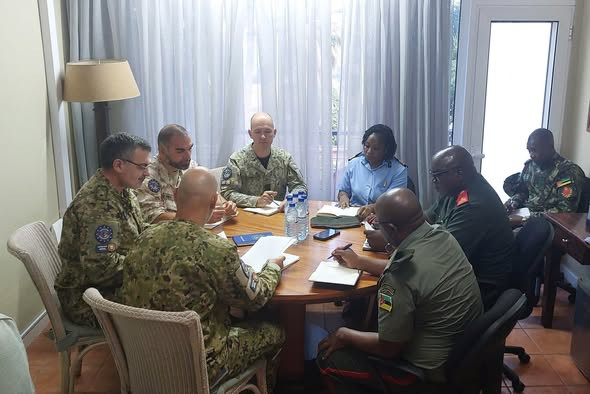
Behind the tables in Maputo, another essential effort is underway. In a high-level meeting, the Force Commander of EUMAM Mozambique, Commodore César Pires Correia, and the FADM Director of Logistics, Brigadier-General Elias Mataruca, advanced the consolidation of a new Logistic Concept for the Mozambican Armed Forces. This is not merely an administrative reform. It is a structural instrument to modernise processes, optimise resources, and directly strengthen the responsiveness of the QRFs.
Points of Contact are being defined. Specialised working groups are being formed. Staff work, often unseen, always indispensable, is knitting together procedures, supply chains, and operational planning.
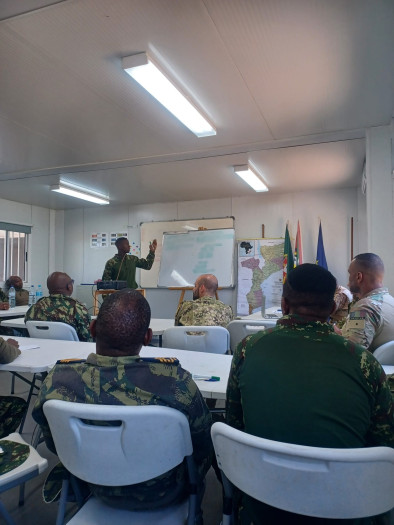
The story here is one of partnership in its most concrete form. European and Mozambican personnel working shoulder to shoulder in training grounds and meeting rooms alike. Mentorship that empowers Mozambican leadership. Regeneration of the QRFs under Mozambican lead as the cornerstone of long-term self-sustainability.
In Katembe’s dust and in Maputo’s conference rooms, a bond is being forged: practical, professional, and forward-looking. A bond that translates solidarity into capability, and cooperation into lasting resilience.
EUMAM MOZ
EUMAM Mozambique helps the Quick Reaction Forces (QRF) of the Forças Armadas de Defesa de Moçambique (FADM) to achieve a sustainable operational cycle in accordance with International Humanitarian Law no later than June 2026. It combines advising, mentoring and specialised training.
Media gallery
-
Image
EUMAM MOZ
See also
MORE STORIES


