About the EOM São Tomé e Príncipe 2026
Following an invitation from the Santomean authorities, the European Union has deployed an Election Observation Mission (EU EOM) to São Tomé e Príncipe to observe the Presidential, Parliamentary, Local and Regional elections, which are scheduled to take place on 19 July and on 27 September 2026, respectively.
EU EOM composition
The EU Election Observation Mission is led by Chief Observer Sérgio Humberto, a Member of the European Parliament from Portugal.
A Core Team of seven analysts arrived in São Tomé on 14 June to assess all aspects of the electoral process, including political, operational, legal, human rights and gender issues, as well as media and social media. They are supported by logistical and security experts.
A team of Long-Term Observers arrived in São Tomé e Príncipe on 26 June to observe the electoral process in the field and report to the Core Team.
Shortly before election day, they will be joined by 14 Short-Term Observers. On election day, the Mission will be reinforced by observers from EU diplomatic missions accredited to São Tomé e Príncipe. A delegation of Members of the European Parliament will also join the EU EOM. They will observe voting, counting and the tabulation of results.
The EU EOM will remain in the country until the completion of the electoral processes.
EU EOM mandate
The Mission’s mandate is to provide an assessment of the electoral process. The EU EOM assesses the extent to which the elections comply with Santomean Constitution and laws, and with São Tomé e Príncipe’s international commitments related to democratic elections.
The EU EOM is independent in its findings and conclusions. It operates autonomously from the EU Delegation to São Tomé e Príncipe, EU Member States, and all EU institutions. The Mission is also completely independent of the Santomean authorities, politicians and institutions.
The EU EOM operates in accordance with the “Declaration of Principles for International Election Observation”, adopted at the United Nations in 2005 by a number of international organisations involved in election observation, including the African Union.
EU observers adhere to the Code of Conduct for International Election Observation to ensure their impartiality. They are also bound by ethical guidelines. They do not interfere in the electoral process, including by offering advice or assistance.
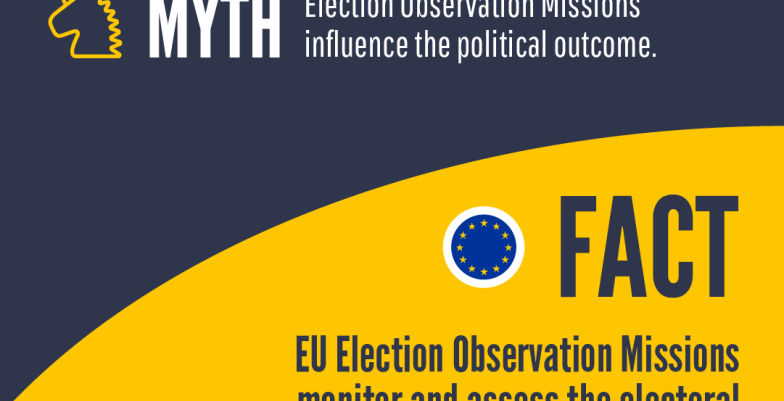
The EU’s observation methodology is comprehensive and long-term, and is applied in the same way to all EU EOMs deployed around the world. The EU EOM neither legitimises the electoral process nor validates election results.
During its observation, the EU EOM São Tomé e Príncipe2026 will meet with representatives of the National Election Commission (CEN), as well as relevant national and local authorities and political parties, as well as with representatives of civil society, academia, the media, and the international community.
On election day, the EU EOM will observe the opening of polling stations, the voting process and the counting of votes, the tabulation of results, and the complaints and appeals process.
The EU EOM will publish a preliminary statement shortly after each election day. These statements will outline the EU EOM’s initial findings and conclusions, and the extent to which the Mission considers that the election was conducted in accordance with Santomean laws and the international standards for democratic elections the country has subscribed to.
A comprehensive final report, with recommendations offered to the authorities and the public for future elections, will be issued within two months of the conclusion of the electoral processes.