
European Council discussed relations with Russia
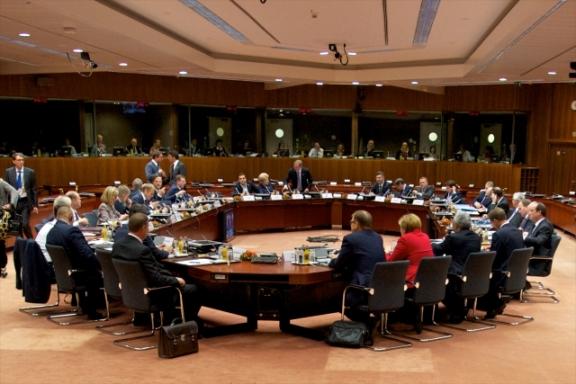
Speaking at the press conference following the first day of the meeting Donald Tusk, President of the European Council, said to this end: "This evening we had a broad discussion about Russia. Leaders emphasised all sorts of Russian activities, from airspace violations, disinformation campaigns, cyber-attacks, interference into the political processes in the EU and beyond, hybrid tools in the Balkans, to developments in the MH17 investigation. Given these examples, it is clear that Russia's strategy is to weaken the EU. We have a sober assessment of this reality, and no illusions. Increasing tensions with Russia is not our aim. We are simply reacting to steps taken by Russia. Of course the EU is always ready to engage in dialogue. But we will never compromise our values or principles. That is why leaders agreed to stay the course. And above all to keep the unity of the EU."
Following the debate, the European Council adopted the following conclusions on external relations:
"The European Council strongly condemns the attacks by the Syrian regime and its allies, notably Russia, on civilians in Aleppo. It calls on them to bring the atrocities to an end and to take urgent steps to ensure unhindered humanitarian access to Aleppo and other parts of the country. The European Council calls for an immediate cessation of hostilities and for resumption of a credible political process under UN auspices. Those responsible for breaches of international humanitarian law and human rights law must be held accountable. The EU is considering all available options, should the current atrocities continue. Everything should be done to extend the ceasefire, bring in humanitarian aid to the civilian population and create the conditions for opening negotiations on a political transition in Syria.
The European Council invites the High Representative to continue, together with the Commission, pursuing the EU humanitarian initiative and medical evacuations in cooperation with the UN; and to reach out to key actors in the region on a political transition and on preparations for post-conflict reconciliation and reconstruction.
The European Council held a strategic policy debate on relations with Russia."
More information:
http://www.consilium.europa.eu/en/meetings/european-council/2016/10/20-21/