
Support Programme for Refugee Settlements in the Northern Uganda (SPRS-NU)

With the renewed fighting in South Sudan and the continuous influx of south Sudanese refugees, Uganda has now become the top refugee-hosting country in Africa and host of the largest refugee settlements in the world.
The influx from South Sudan shows no sign of stopping. South Sudan crisis is now the largest refugee situation on the continent and Uganda is experiencing the fastest growing refugee crisis in the world.
Total Cost (EUR): 20 000 000
EU contracted amount (EUR): 20 000 000
Duration: July 2016 - December 2020
Implementing organisation: Austrian Development Agency, Belgian Technical Cooperation, and NGO Consortium (led by Danish Refugee Council, includes ZOA, CEFORD, Save the Children)
Funding Instrument: EU Emergency Trust Fund for Africa
Benefitting zone: Uganda
STORY : Support programme for refugee settlements in the Northern Uganda (SPRS-NU)
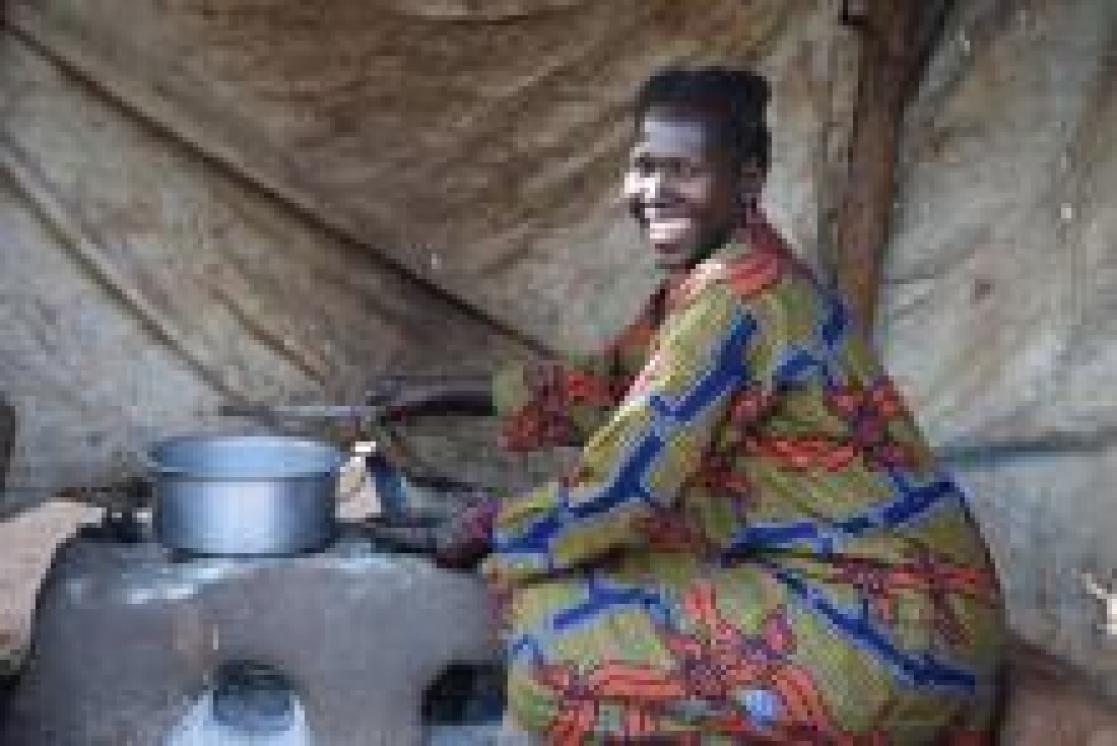
"After escaping South Sudan, my life is finally changing for the better. Now I am busy making soap with my women’s group and selling it at the market. Working together, and being able to trade and sell at the market, gives us a great opportunity to learn new things and to secure some financial stability."
Josephine Ayuru, 34 years old, South Sudanese refugee settled in the Bidibidi refugee settlement
CONTEXT
Since the beginning of the SPRS-NU programmes throughout the second half of 2016, the refugee situation in the Northern Uganda has taken a dramatic turn. With the renewed fighting in South Sudan and the continuous influx of south Sudanese refugees, Uganda has now become the top refugee-hosting country in Africa and host of the largest refugee settlements in the world. The influx from South Sudan shows no sign of stopping. South Sudan crisis is now the largest refugee situation on the continent and Uganda is experiencing the fastest growing refugee crisis in the world.
OBJECTIVES
- The objective of the SPRS-NU is to ensure a peaceful co-existence between host communities and refugees in the refugee-hosting districts of Northern Uganda, namely Adjumani, Arua, Kiryandongo and Yumbe. This project improves the living conditions of both refugees and host communities by enhancing food security, inter community dialogue and conflict prevention, and provision of basic services such as education, water and sanitation.
- Sustainably improve food security, nutrition and livelihoods of refugee population and host communities.
- To improve livelihoods, food and nutrition security, to mitigate risks of further escalation of conflicts and to increase access to education. This is done through (1) improving food and nutrition security, livelihoods, increasing productivity, and through intensification of exchanges between refugees and the neighbouring communities; by (2) improving inter-community dialogue at local level and putting in place conflict prevention mechanisms; and by (3) improving the level of education, skills development, and developing medium and long-term economic opportunities for refugees and host communities – especially for youth and women, in order to contribute to a better integration of refugees.
RESULTS
- The SPRS-NU is expected to reach 300 000 direct beneficiaries within the 4-year period.
TESTIMONY
Skills and livelihood interventions transforming lives of refugees: a tale of three women
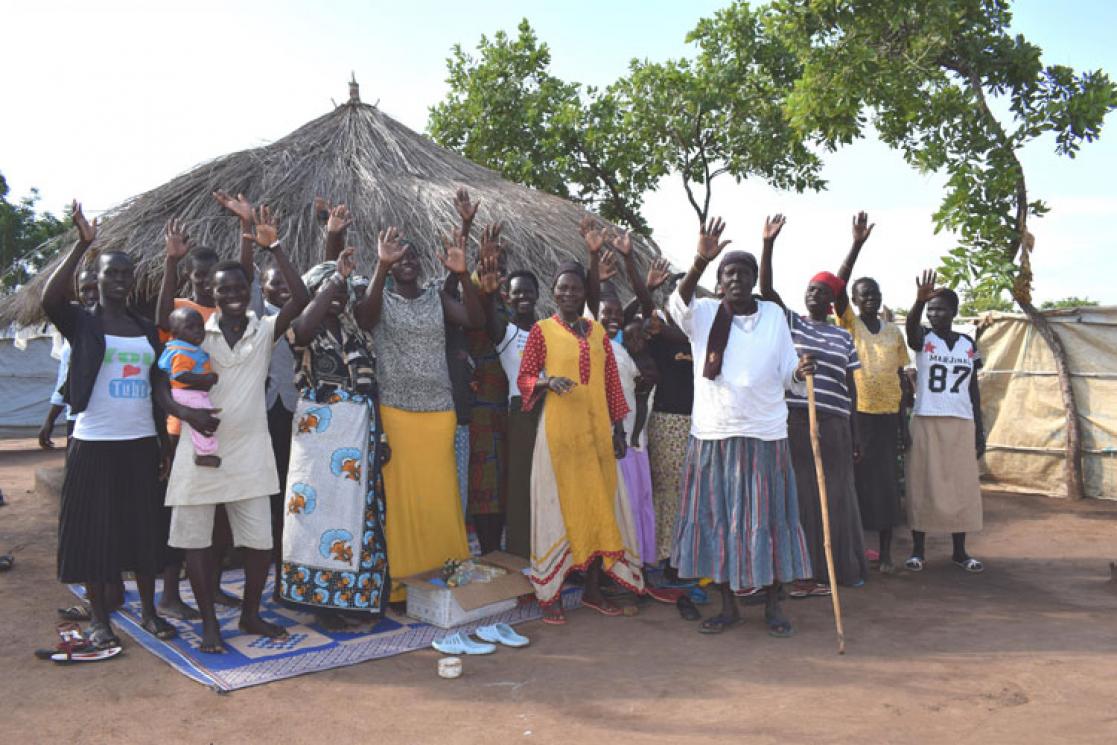
A mere thought of her journey from South Sudan to Uganda boarder brings tears to her eyes, as 23-year old Nancy Maneno cuddles on to her 6-month old baby. She soaks in more tears while reminiscing of the attack on her family during the war. "When the war broke out, my three children and I stayed in the bush for days with no food. Coming to such a peaceful environment in Uganda is a like miracle" she says. Next to her is 27-year old Betty Ekisa who came to Bidibidi refugee settlement in August 2016 after her home was attacked by rebels in South Sudan. She walked for two days with her husband and 4 children to the Ugandan boarder, where they were later transported to the settlement.
Betty and Nancy are comforted by 34-year old Josephine Ayuru who describes the skills they just gained from a short-term training in soap making as transforming. Josephine is the treasurer of Manjoora women’s group comprised of 30 women to which Betty and Nancy belong. "After escaping South Sudan, my life is changing for the better. Now I am busy making soap with my women’s group and selling it at the market. Working together, and being able to trade and sell at the market, gives us a great opportunity to learn new things and to secure some financial stability", she adds.
These three women have one thing in common. Despite being victims of the South Sudan conflict they have put their tragic tales aside to work and support each other in these difficult times. Manjoora women’s group is found in Bidibidi refugee settlement area, the largest settlement in the world hosting 272 000 refugees.
The women’s group was formed by CEFORD, a community empowerment organisation for livelihoods under the consortium led by Danish Refugee Council (DRC) and were trained in livelihood actions based on the participatory driven Enabling Rural Innovations (ERI)/ Participatory Action and Enterprise Development (PAED). As part of collaborative efforts between livelihood and skills interventions, Belgian Development Agency (BTC) has trained the women in their pilot skills development through an entrepreneurship voucher scheme. The goal is to enhance livelihood and labour market relevant skills for youth, women and girls of the refugees through short term vocational training and entrepreneurship support.
Group members such as Nancy, Betty and Josephine gain skills in soap making for subsistence and income generation. This will empower them financially. Manjoora women’s group plan to specialize in soap making business for their zone in Bidibidi refugee settlement and empower fellow women outside their group for financial stability. The group has 30 members, all women, who meet twice a week.
FACTS AND FIGURES
- Since mid-2016, the population of refugees has more than doubled to over 1.2 million
- Refugees are arriving from South Sudan at a rate of more than 2 000 per day
- 86% of the refugee population consists of women and children
- In some districts, refugees have already outnumbered the host communities and public services are overwhelmed