THIS CONTENT HAS BEEN ARCHIVED
The Importance of Open Contracting and Preventing Corruption in Infrastructure: Best Practices"
Text
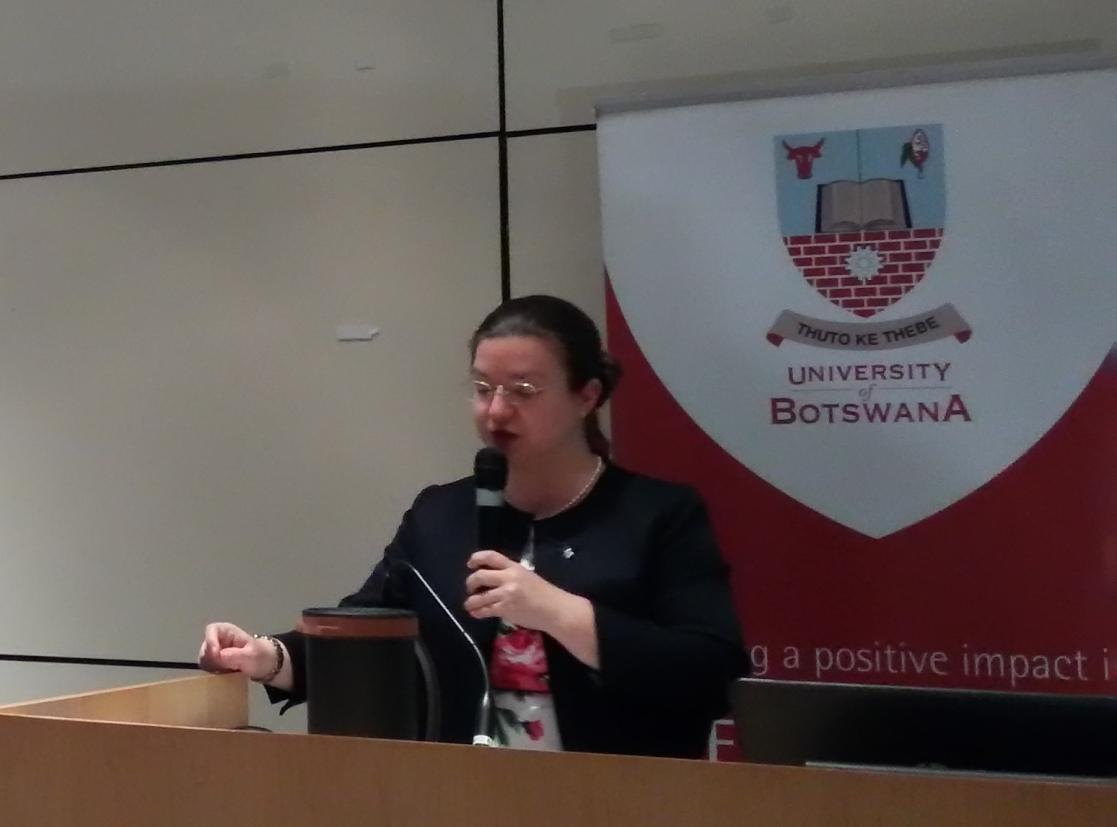
Botswana Centre for Public Integrity – Integrity Week 2018
12 - 14 September 2018
UB Library Auditorium
Katrin Hagemann, Chargé d'affaires a.i.
Delegation of the European Union to Botswana and SADC
"The Importance of Open Contracting and Preventing Corruption in Infrastructure: Best Practices"
- The EU has been in Botswana since 1981, supporting Botswana now for more than 40 years. However, the cooperation has evolved – in the past, we have indeed supported a number of infrastructure projects in Botswana. Nowadays, much of our support goes into budget support to the government.
- I will be looking at how the EU prevents corruption among its own staff, among its Member States, and when supporting the fight for corruption in 3rd countries.
Public procurement and corruption in the EU and corrective measures:
- Public procurement involves significant financial flows and complex procedures. It also is a "hot spot" for corruption. 20% of the EU GDP (2.3 trillion €) is spent in goods, works and services. According to the European Commission’s 2014 Anti-Corruption Report, corruption costs EU society around €120 billion per year.
- Direct costs are particularly high in three sectors: road and rail, water and waste and urban/utility construction. In terms of indirect costs, corruption in public procurement leads to distortion of competition, limited market access and reduced business appetite for foreign investors.
- Corruption in procurement is highly detrimental for the efficiency of the use of tax payers' money: on the one hand, costs of goods and services are likely to increase and on the other hand, corruption will lead to suboptimal quality of works or services which can be extremely damaging for infrastructures and can even cost lives.
- European public procurement legislation aims at keeping procurement markets open EU-wide to ensure the most efficient use of public funds. In 2016, EU Public Procurement Directives were adopted to provide EU countries with stronger tools and incentives to prevent corruption and create a culture of integrity in public procurement. They include numerous measures aiming at making procurement processes more open.
- Transparency is the worst enemy of corruption and malpractices in public procurement. Tackling corruption will require to setup transparent procurement systems with clear regulations which are enforced by strong institutions. The system should also facilitate access to information and should include efficient complaint mechanisms.
- But we can do still more: i) disseminate information about measures in place notably to businesses and potential bidders; ii) increase the protection of whistle-blowers; iii) promote a culture of integrity within public institutions; iv) give more responsibility to procurement officers from the beginning of the process until the end.
- Among its own staff, the EU has established strict measures that are aimed at helping fight corruption. These include for example a 4-eyes or 6-eyes principle, regular rotation of staff in all financially sensitive posts, the requirement to declare all gifts and ban of all gifts above a certain amount, protection of whistle-blowers, strict rules on tendering with equal information to all potential tenderers, and the regular scrutiny through the European Anti-Fraud Office and the European Court of Auditors.
What the EU does to fight corruption in partner countries:
- According to a recent report by the ONE Campaign, US1$ trillion flows out of developing countries each year through corruption and malpractices such as illegal tax evasion, money laundering, use of shell companies, and 'shady' natural resource deals. Corruption robs countries of their resources and development potential, and disproportionately affects the poor like a regressive tax.
- The European Commission is committed to the fight against corruption, intervening at global, regional and country level, both on the preventive and curative side.
- The 2003 Communication on a Comprehensive EU policy against corruption sets the basis for EU action, calling for the detection and punishment of all acts of corruption, and the confiscating of illicit proceeds.
- The 2011 Anti-Corruption package reiterates the EU's commitment to focus on corruption in all related, internal and external, EU policy fields.
- The new European Consensus on Development recognizes the role of corruption, money laundering and illicit financial flows in derailing sustainable development, and promotes accountable institutions, equal access to justice, and transparent funding.
- The direct link between sustainable development, accountable institutions, and the fight against corruption is also recognized in SDG 16, which specifically calls for the reduction of corruption and bribery in all their forms.
- Corruption flourishes when weak institutions cannot hold corrupt politicians and officials accountable. On the other hand, developing accountable leadership and institutions is extremely hard in a corrupt environment, when power is used for private gain. As both a symptom and a cause of failing governance systems, corruption should not be addressed in isolation, but through a comprehensive approach that includes support to democratic governance, strengthened and independent enforcement mechanisms, transparency, accountability, participation and access to information.
- The EU fights against corruption in its external actions through a combination of instruments that include:
- Support to public administration reform and sound public financial management, including the development of integrity and accountability frameworks;
- Support to the fight against economic/financial crime through capacity-building for law enforcement and judicial authorities, and support to Justice and Security sector reforms (including police reform);
- Support to establishing a robust legal framework in line with international standards on preventing and fighting corruption.
- Support to establishing and strengthening specialized anti-corruption bodies.
- Support to civil society, the media, whistle-blowers, human rights defenders, as well as Supreme Audit Institutions and Parliaments in exercising their oversight and control functions.
- Support to the improvement of the business and investment climate and customs reform.
- An example of this multi-level approach is the Rule of Law and Anti-Corruption project in Nigeria, funded under the European Development Fund, with a total budget of 25 M EUR. The project addresses criminal justice reform, tackles corruption in public procurement, the extractive industries, and the criminal justice system, and improves citizen, civil society, media and private sector engagement, providing a comprehensive response to the fight against corruption.
- The fight against corruption and fraud is also addressed through budget support operations, where the effectiveness of anti-corruption measures is maximized by a combination of top-down and bottom-up approaches that introduce reforms simultaneously. Corruption is closely assessed during formulation and implementation of Budget Support Operations through PFM dialogue and budget transparency.
- As per support to PFM, the EU is first contributor to the PEFA secretariat and we financially support assessments regularly
- In addition to PEFA, MAPS (Methodology for Assessing Procurement Systems) developed in 2003/2004 provides an analysis of strengths and weaknesses of public procurement systems.
- So what are our recommendations and lessons learnt when it comes to fight against corruption? I will leave you with a few concluding thoughts:
- More laws and regulations on corruption is not automatically required and can be counterproductive
- Specific institutions can help but may not be sufficient
- Press freedom and the strengthening of civil society are essential to fight corruption effectively
- Judicial independence is also an integral part in fighting corruption
- Transparency of the budget is required
Thank you very much for listening.