
EU support reveals the green economy potential of 99 Indonesian villages
European Union support reveals the green economy potential of 99 Indonesian villages
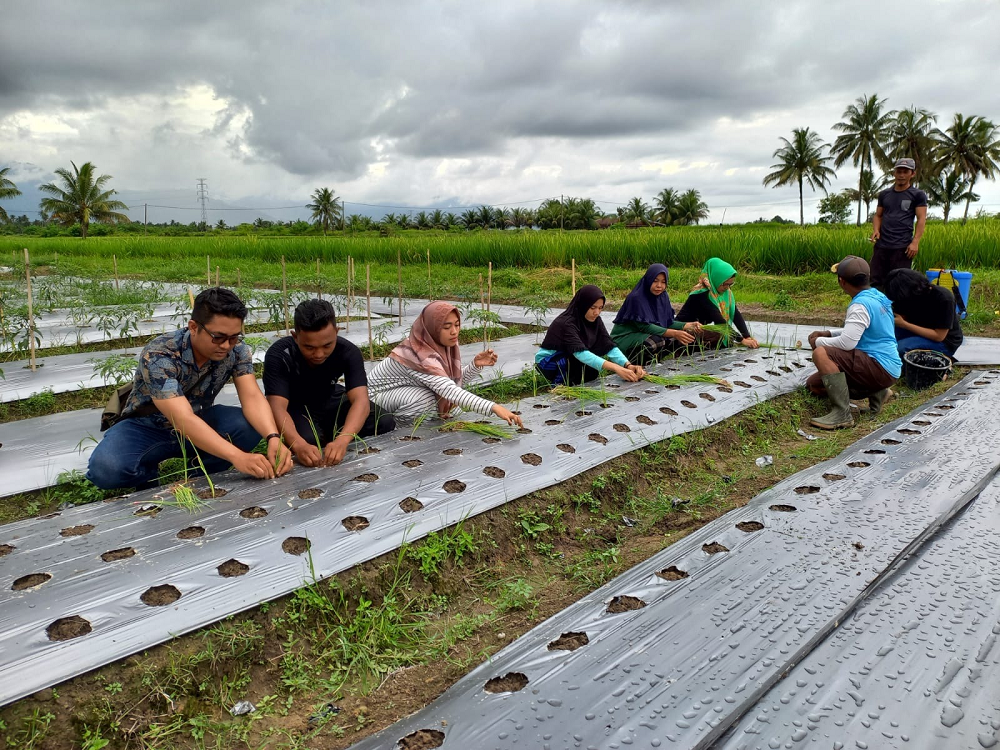
The European Union (EU), Penabulu Foundation, Konsil LSM Indonesia and KpSHK held a closing ceremony of their project “Promoting Green Economic Initiatives by Women and Youth Farmers in the Sustainable Agriculture Sector in Indonesia (ECHO Green)”. This 3-year project of more than 1 million euros supported vulnerable communities, especially women and youth farmers, in three districts, namely Padang Pariaman (West Sumatra), Grobogan (Central Java), and East Lombok (West Nusa Tenggara), reaching more than 350,000 direct beneficiaries.
ECHO Green introduces a new inclusive green economy initiative in the agriculture sector to empower women and youth farmers. The project works with women and youth farmers to build their capacity not only on the technical aspects of agriculture, but also by improving their market understanding and agricultural business literacy.
ECHO Green has successfully produced 495 thematic maps in 99 villages that focus on village natural resources potential, agricultural land-use, disaster vulnerability, water resources management and irrigation, as well as High Conservation Value (HCV) areas.
The sustainability of the ECHO Green project has been ensured through the existence of 16 Village Decrees (PerDes/PerNa) regarding village spatial and inclusive land-use planning and 3 District Government Circular Letters, reinforcing the participation of women and youth. It is hoped that the principles of green economy can continue and develop into other schemes and models that are feasible and can be applied especially by women and youth farmers.
Director of Penabulu Foundation, Eko Komara expressed his highest gratitude and appreciation to the European Union, “Thank you for supporting the inclusive economic development over the years, and for supporting civil society in all aspects including ensuring a green and inclusive recovery. It is due to these commitments that the ECHO Green can become a transitional project towards a Green Economy at the local level, especially in Padang Pariaman, Grobogan, and East Lombok,” said Eko.
On the same occasion, Regional Secretary of Padang Pariaman Rudy Repenaldi Rilis, S.S.TP., MM expressed his appreciation for the project. “The district government supports and welcomes the ECHO Green project and hopes that the younger generation can promote the concept of a green economy to a broader level so that they can overcome agricultural problems, considering that more than 50 percent of Padang Pariaman area is agricultural land and most farmers are of average age”.
Similarly, Drs. H.M. Juaini Taofik, M.AP, Regional Secretary of East Lombok stated, “The ECHO Green strategy and concept get along well with what has been planned by the East Lombok District Government”. He further conveyed that the ECHO Green project has opened employment opportunities for women and youth farmers through its green initiative model practices and has educated them to become productive, sustainable farmers.
Regional Secretary of Grobogan Dr Ir Mohamad Sumarsono, M.Si said, “The work that has been done by the ECHO Green which encourages the involvement of women and the younger generation of farmers needs to be supported and replicated by the district government. The district government will design a plan for the program’s sustainability with related agencies by replicating the stages and achievements that have been gained by the ECHO Green”.
“The ECHO Green project has helped to increase sustainable agriculture productivity as well as decent employment,” said EU Ambassador Vincent Piket. “We have given technical assistance to women and youth farmers in 99 villages in Padang Pariaman, Grobogan, and East Lombok, reaching more than 350,000 direct beneficiaries. The project has also produced 495 thematic maps that allow village stakeholders to see land-use patterns for economic and social policy implementation. For me this is a very good example of the EU’s objective to support Indonesia’s sustainable development.” he added.
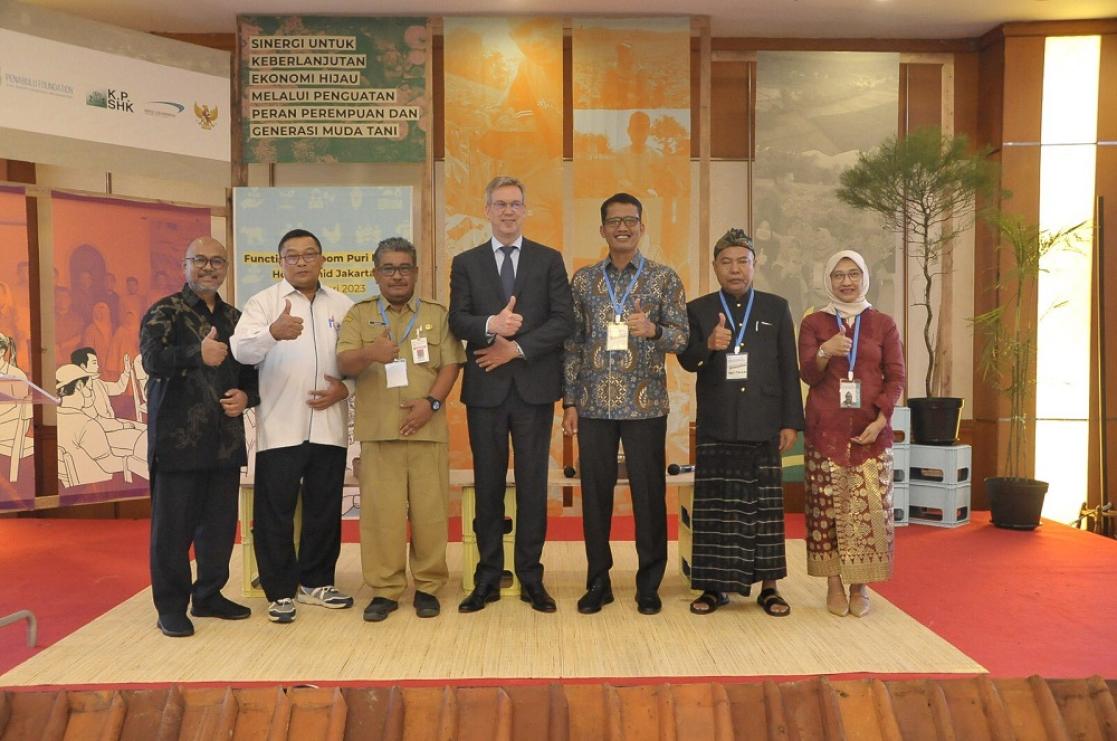
Marking the end of the project, Ambassador Piket symbolically handed over various results of the ECHO Green project in the form of policy brief on village-based green economy, Study Report on Green Agriculture and Potential Economic Growth at sub-district level, and samples of processed products from women and youth farmer groups facilitated by the project such as cashew nuts, virgin coconut oil (VCO), and rice.
The event concluded with a panel discussion on green economy in the regulations, financing and programmes in Indonesia and sharing good practices on green economic model in the agriculture sector through an exhibition.
ECHO Green Project

ECHO Green Project