World NGO Day: Celebrating those working towards peace
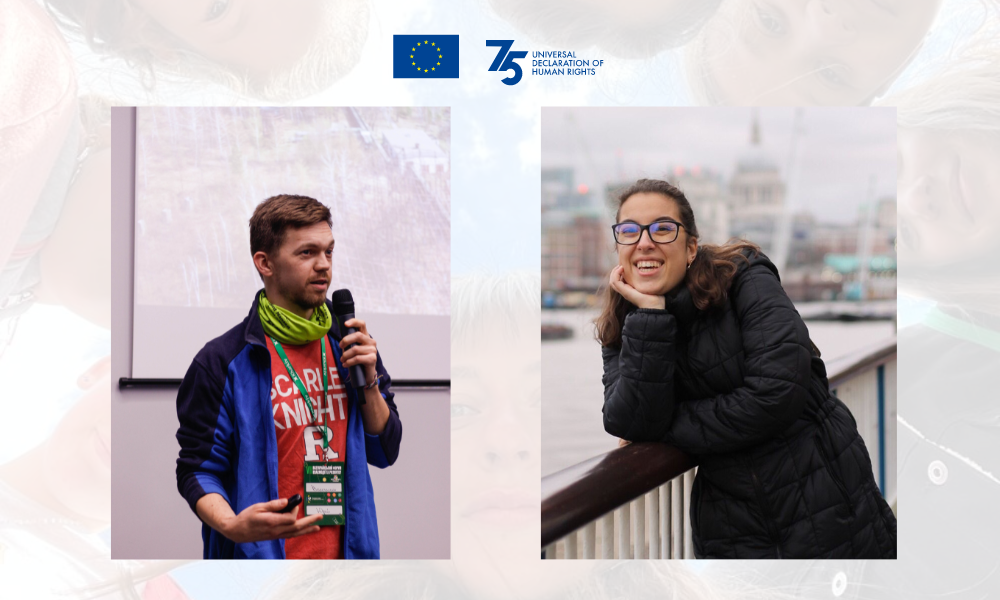
Seventy-five years ago, the international community recognised inalienable and indivisible rights inherent to each individual. The Universal Declaration of Human Rights called upon everyone to stand up for human rights. NGOs around the world are essential partner to uphold rights for all and work for a peaceful, just and sustainable world.
From hope to action
Yurii places his laptop in front of him while he tells his story. After a few days with no electricity, he finally manages to take a call. He’s now back in his hometown, Kharkiv, from where he had to flee a few months ago when the Russians tried to invade and occupy the city. He has been working there for Stella organisation since 2018.
Working in an NGO is something that comes naturally to him. ‘I took part in a European Voluntary Service (EVS) programme in the Netherlands, and in several Erasmus+ projects,’ he said. ’Once I came back, I said to myself, “Now I need to make use of all this knowledge and skills and to develop something similar”. And that’s how I got to Stella’.
The escalation of the Russian war of aggression in Ukraine in February last year was the turning point in the lives of millions of people and organisations. At the end of 2021, Yurii and his colleagues were hopeful about planned projects and their potential impact in their communities, but all this came to a halt. ‘During the first weeks, we weren’t able to work,’ he said. ’We were literally escaping to save our lives and the lives of our families.’
For Yurii, the key moment was when he was walking through the city, with the air raid sirens sounding and he heard and felt Russian fighter jets flying over his head. He spoke with his family and decided to evacuate the next day.
After ensuring their safety, Yurii and his colleagues got back to work. It was impossible to carry on usual activities in their country at war, so Stella extended its work with its international partners in making good use of the skills and interest of Ukrainian youth in joining volunteering projects abroad.
‘In the first months there were some really memorable stories of connecting volunteers with NGOs,’ said Yurii. He recalls how many of these volunteers would reach out to him, sharing that they were taking refuge in bomb shelters and working on their CV and motivation letters at the same time.
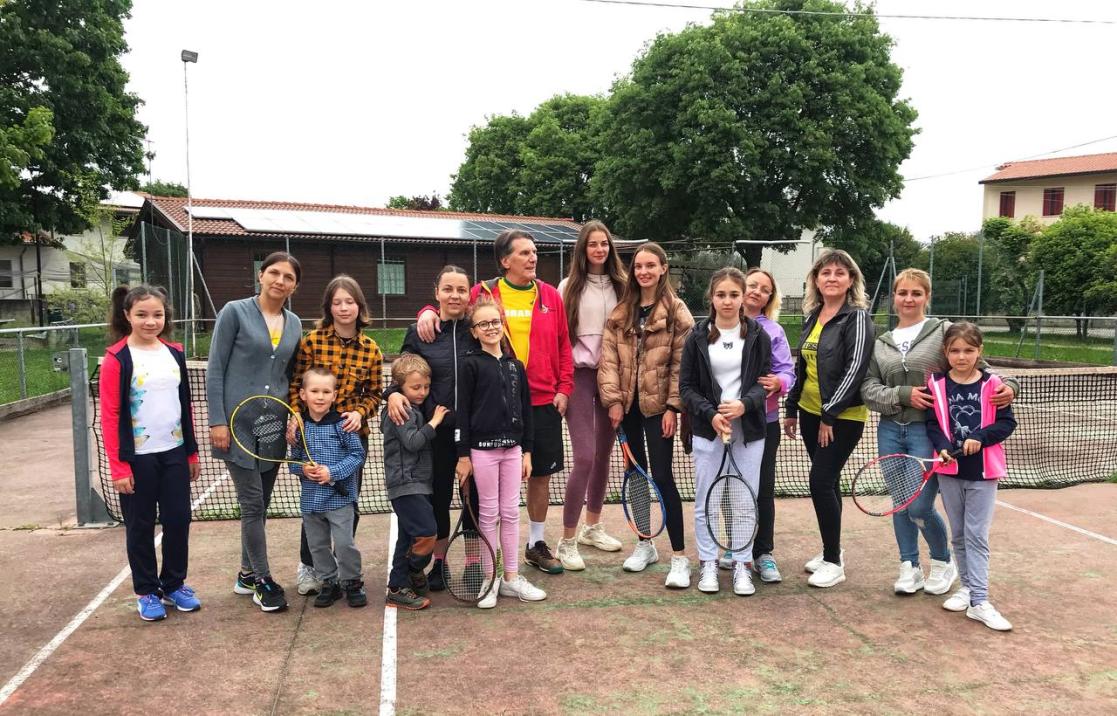
He shares more detail about one of the recent cases. ‘There were these two sisters who became volunteers right after they escaped from Mariupol. The hosting organisation was asking for two people and one week later the sisters went to Italy working with local and Ukrainian kids,’ he said, adding, ’It was the best for them.’
Active Youth Stella
The Stella NGO supported around 150 people joining volunteering projects abroad, in 2022 alone. For Yurii, this is the best way to promote diversity and contribute to a more understanding and peaceful environment. ‘When selecting candidates, we are sensitive to their experience or lack thereof,’ he said. ‘I try to include people who have never left the country, as this is a great opportunity for them to get in touch with different values and understand other cultures.’
‘Isn’t the ocean made up of tiny drops?’
Over the phone Margarida shared her excitement about embracing a new project in an NGO in the interior of Portugal. As with Yurii, Margarida started working for an NGO when she was very young. ‘I first volunteered for an NGO while I was still at University, and from there I kept on looking for more projects that had a similar impact in people’s lives,’ she said.
While working for the British Red Cross, as European Solidarity Corps (ESC) volunteer, Margarida was supporting refugees arriving to the United Kingdom. NGOs play an enormous role in providing early assistance, especially delivering humanitarian relief in areas affected by conflicts or natural hazards. When reflecting on her impressions from these actions, she recalls the impact that “being in contact with refugees, having the opportunity to listen to them, to their stories’,. had on her personally.
On top of her activities at the British Red Cross, she also volunteered in another organisation supporting asylum applicants and their families. She enjoyed helping in the reunification of families. ’Having the chance to be part of a solution for people’s problems made me happy,’” she said.
Solidarity knows no borders and working for the Portugal-based AMI NGO in the past year, Margarida coordinated the support provided to organisations receiving refugees coming from Ukraine. This included the provision of medical and pharmaceutical equipment, as well as financial support for the integration process.

2022 AMI | Assistência Médica Internacional
‘One of the things I recall is a clinic that was being supported by our NGO. They were operating on the border, close to Hungary. Listening to stories medical staff was sharing and their concerns became part of our activities’ she said. In Romania, Margarida also had the chance to visit one of the associations supported by AMI: ’The majority of people reaching here were mothers with their kids. They didn’t know what to expect, they were still in shock. And at the same time, they had a lot of hope’.
With her experience in different organisations, Margarida’s has concluded that NGOs can generate a huge impact. ‘NGOs are often the alternative when governments and established structures aren’t able to fully assist the most vulnerable. Even the smallest ones can have an incredible impact at the local level,’ she said. ’They establish networks of support and frequently do all it takes to support the community. Our work may be a drop in the ocean, but isn’t the ocean made up of tiny drops?.’
EU continued support to NGOs |
|
The stories of Yurii and Margarida are important examples of what individuals and NGOs can do and are doing every day to improve the lives of others. These contributions span a huge range, in Ukraine and around the world, from NGOs that provide essential basic and humanitarian services, ensure education and civic life, to those who protect human rights defenders or document war crimes and abuses. These activities deserve and receive our support, through keeping channels of communication and transfer of material and financial assistance open, helping NGOs to train and protect their volunteers or staff, by defending and fighting restrictions and criminalization of NGO activity.
Declaration of the EU High Representative/Vice President Josep Borrel on the World NGO Day The European Union celebrates the essential contribution of NGOs in strengthening societies across the world by operating at local level, close to communities, in international solidarity. They are at the forefront when needed. As we celebrate this year the 75th anniversary of the Universal Declaration of Human Rights, it is important to highlight the role of civil society organisations in protecting and promoting human rights for all. This is why the EU has several mechanisms in place to support NGOs globally. Through the Global Europe instrument, the EU provides significant support to civil society actors around the world. This includes a €50 million initiative to systematically monitor and support an enabling environment for civil society, as well support to human rights defenders through the Protect Defenders mechanism, with a €30 million budget for 2022-2027. |