
Papua New Guinea Productive Partnership in Agriculture Project (PPAP)- EU contribution to the Cocoa Component
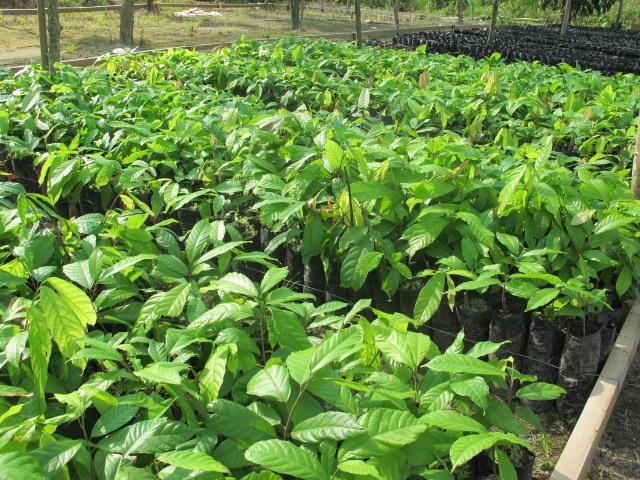
"The PPAP aims at improving the livelihoods of smallholder cocoa and coffee producers through the improvement of performance and sustainability of value chains. The EU grant will enable up-scaling of the cocoa component of the project and allow for 8 000 new cocoa farming households in East New Britain Province and the Autonomous Region of Bougainville to benefit from PPAP from 2015-2017."
John Moxon, Project Co-ordinator, World Bank.
CONTEXT
Cocoa is a major cash crop which provides critical income to a large proportion of rural households in East New Britain and Bougainville. However, since 2006 the outbreak of the cocoa pod borer disease has decimated harvests and jeopardised the livelihoods of thousands of small farmers in both provinces. After the arrival of the insect pest, East New Britain alone saw an 80 % drop of its cocoa production between 2008 and 2012. The PPAP aims to improve the quality of the cocoa production and restore the production to pre-outbreak levels and thus increase the income of smallholder farmers.
OBJECTIVES
- Contribution to the World Bank managed PPAP to tackle the spread of the cocoa pod borer disease in Papua New Guinea in order to save the income of large rural populations
- Improve the livelihoods of smallholder cocoa and coffee producers supported by the project
RESULTS
- Institutional strengthening and industry coordination (Limitation of the negative impact of the cocoa pod borer disease on the cocoa industry)
- Productive Partnerships (Strengthening of coordinating mechanisms in the cocoa industry and development of a strategic industry plan)
- Market Access Infrastructure (Improving the access to markets for the Partnerships supported by Productive Partnership Grants)
TESTIMONY
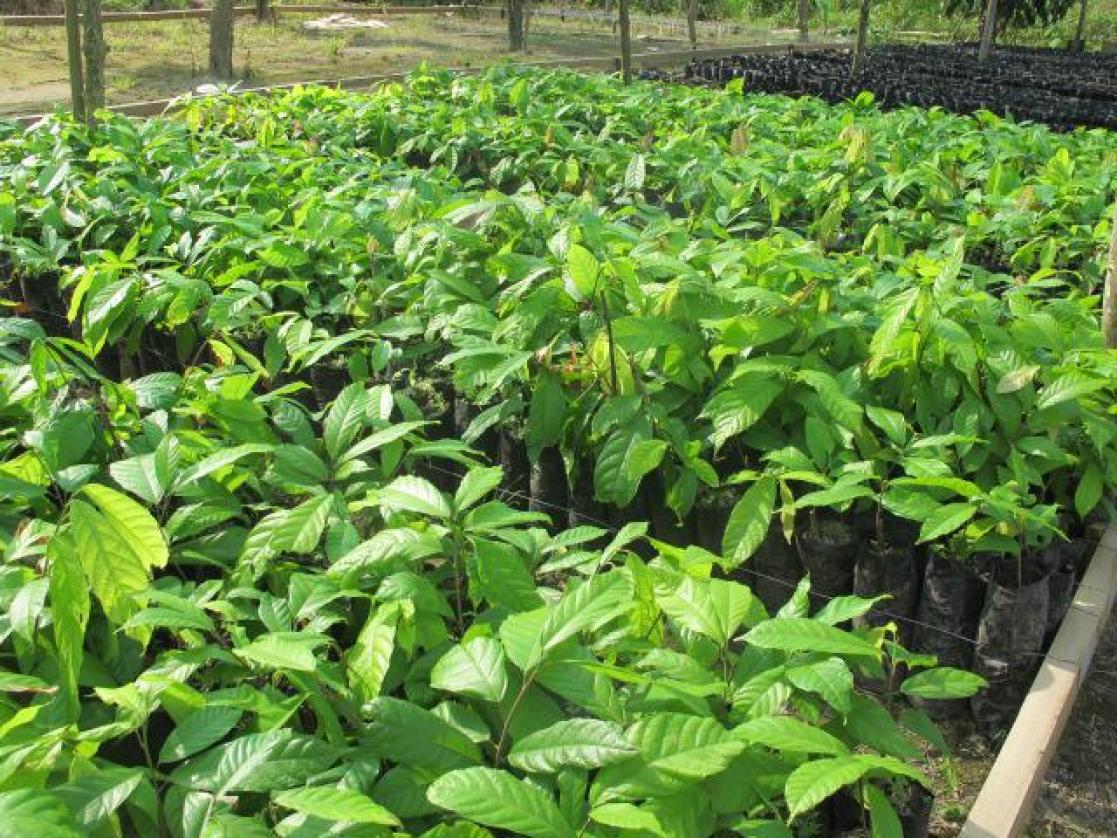
Cocoa trees flowering again
"Thanks to the PPAP, farmers in the region have planted their hybrid clone seedlings either one full or half hectare. Many of the trees are now just over two years old and have already bearings. Those who have planted in late 2012 to early 2014 are happy to see their cocoa trees flowering and bearing cherelles or mature pods.
"A farmer at Radingi Ward in the Inland Baining LLG jumped and shouted in joy when he harvested one kilogram of wet cocoa bean from his farm and sold it to a nearby wet cocoa bean dealer for K1.20. The farmer stated that he can sense the economic benefit of his hard work and commitment. He further heaped praise on the PPAP program and those who have assisted to bring the project to the area. During field visits by the Lead Trainer/Extension Manager, many farmers have commended the PPAP Programme saying that their cash flows will increase thus easing their financial burdens. One farmer at Warakindam Ward has already harvested one dry cocoa bean bag from his one hectare farm. This farmer was the first to plant and has earned PGK 430 from his cocoa sales.
"Generally, farmers are very happy with the current PPAP Project and have participated well. Even those that have not yet planted are waiting patiently for their seedlings. The impact of the project has motivated a lot of people to work in their neglected cocoa blocks."
Hosea Turburat, Kairak Integrated Agricultural Training Programme, University of Natural Resources and the Environment.