
How the EU supports local populations in adapting to climate security risks
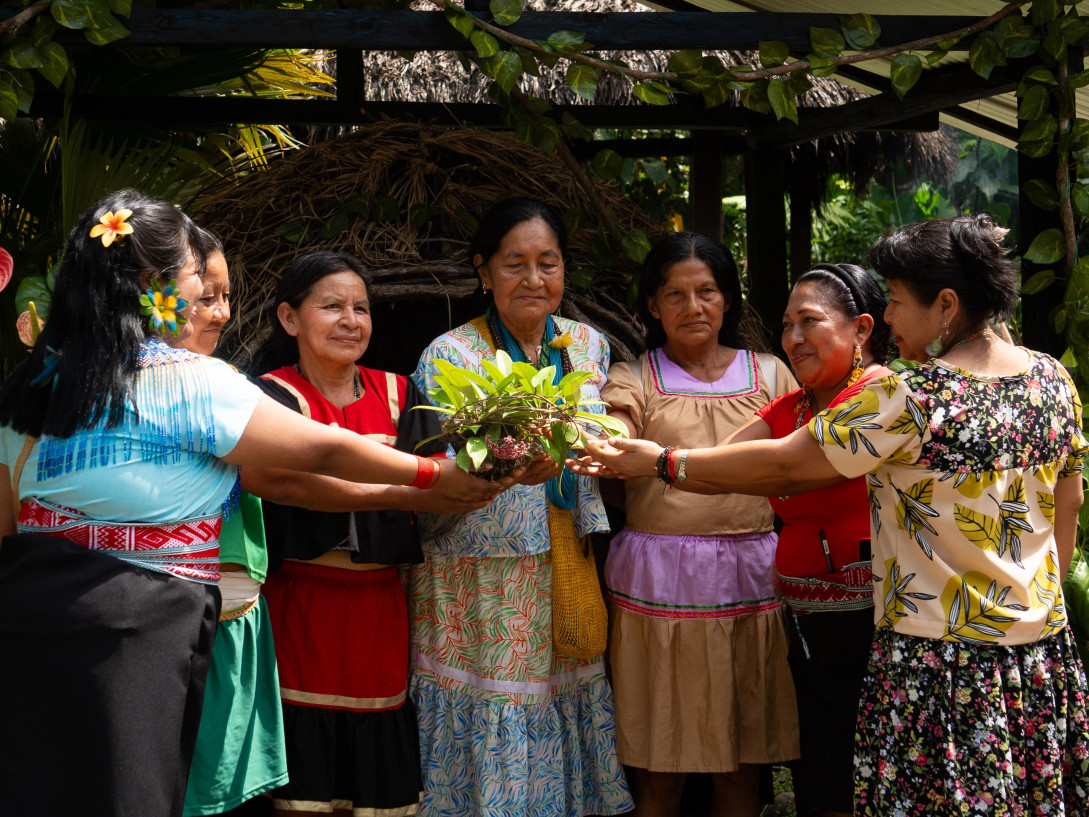
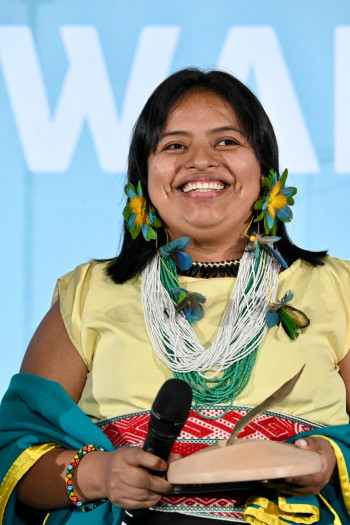
Women such as Paola Chindoy, a member of the Kamentsa Indigenous people of Colombia, are ensuring that future generations can continue to adapt to unpredictable weather systems and the dangerous effects of global warming through new conservation techniques, innovations in bioculture and better land management.
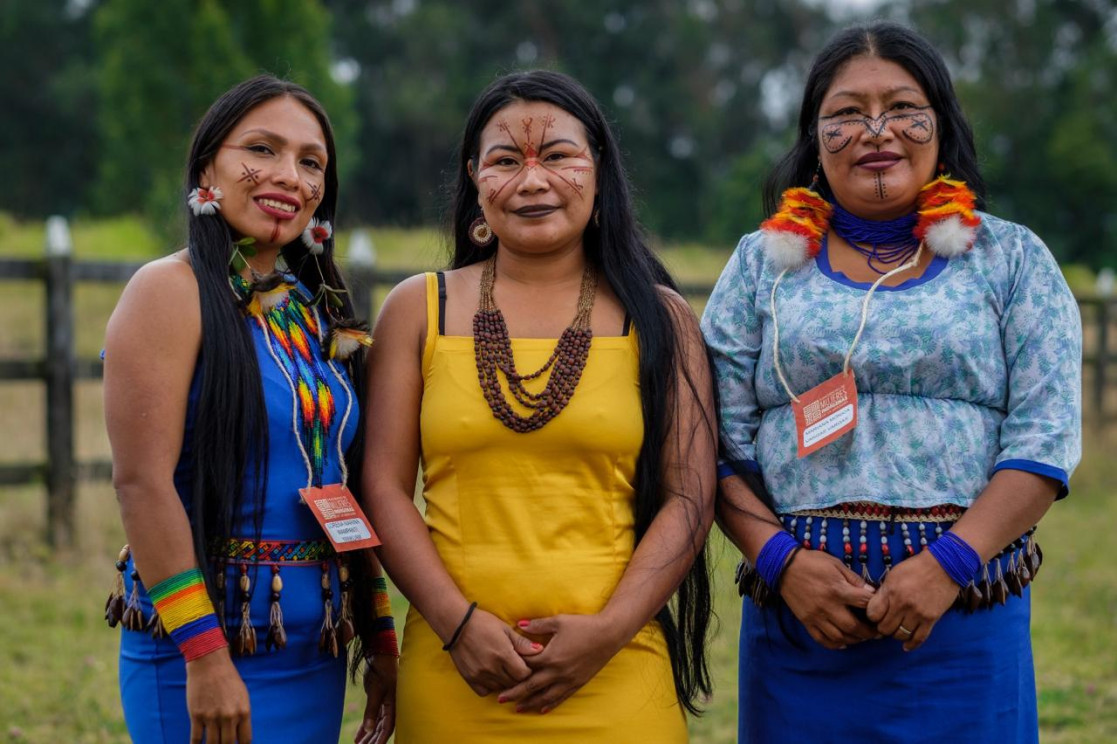
Emilio Aparicio, 2026
This vital work is being supported by the Amazonia Indigenous Women’s Fellowship (AIWF), a programme launched in 2021 by Conservation International to provide the funding and training needed to lead environmental projects rooted in traditional knowledge.
This network has become a vital source of knowledge and learning amongst women who are experiencing similar challenges across different geographies.
- Carolina Rosero, Executive Director, Conservation International-Ecuador
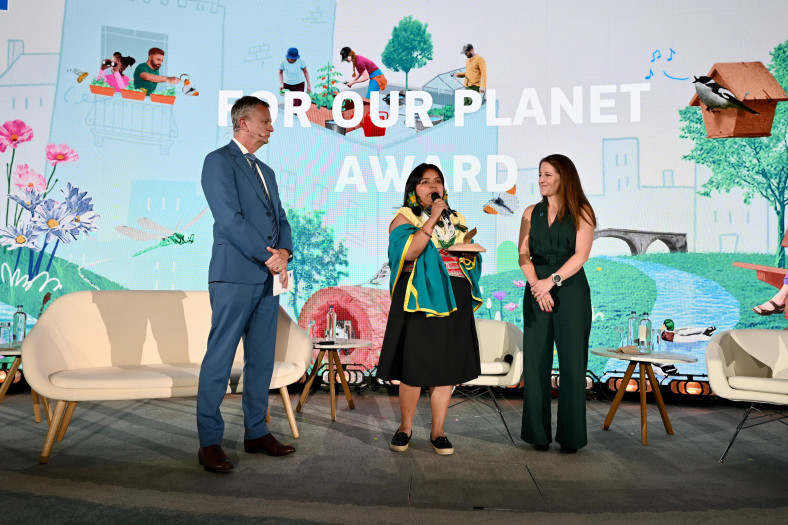
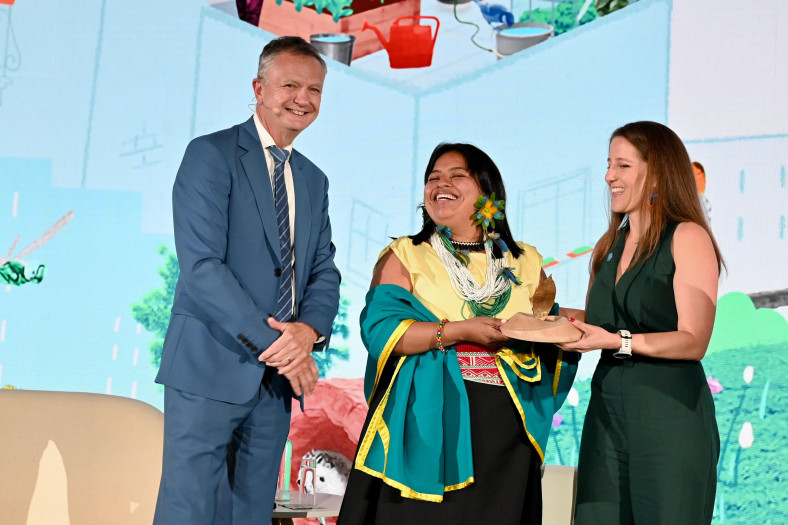
The EU acknowledges the importance of such projects and has this year recognised the work of the AIWF programme with the award of a special #ForOurPlanet prize, part of the EU’s long-running #ForOurPlanet campaign. The campaign addresses the climate and nature crises across the globe. This new prize category of the annual European Training Foundation (ETF) Green Skills Award, recognises exceptional projects working to restore and preserve nature and biodiversity.The prize was collected by Paola Chindoy, President of the Association of Indigenous Women "Chagra de la Vida - ASOMI" and Carolina Rosero, Executive Director, Conservation International-Ecuador.
This recognition is important because it demonstrates and vindicates the rights of Mother Nature and the work of Indigenous women and communities in the Amazon and the importance of safeguarding and defending territorial and cultural rights from the negative impact of climate change.
- Paola Chindoy, upon receiving the #ForOurPlanet award
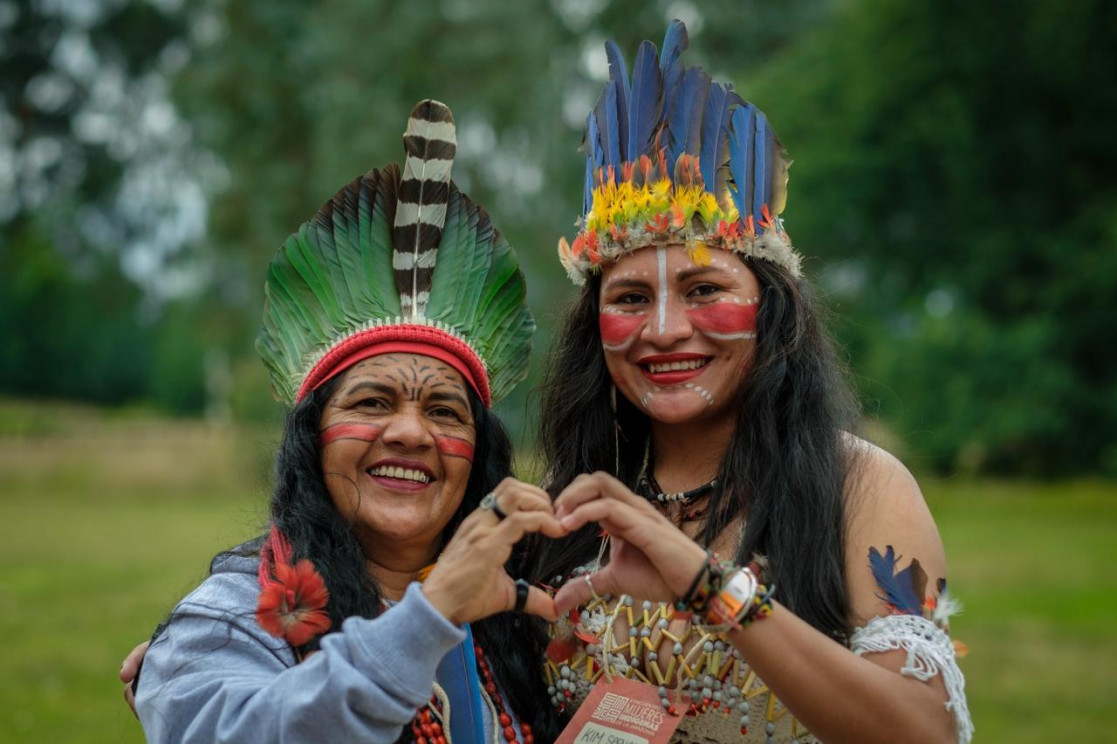
Emilio Aparicio, 2026
How climate change poses security risks for vulnerable communities
The negative impacts of climate change will continue to fall most heavily on the least developed and fragile countries, such as in the Amazonas and in Sub-Saharan Africa, and may reverse development and peacebuilding gains, undermine governance, and increase risks of conflict and instability. Gender-based structural disparities are also likely to add to these climate-related vulnerabilities.
This is why it matters that local knowledge is passed on to help ecosystems cope with climate change, to reduce the ever increasing risk of dangers such wildfires, disease outbreaks and extreme weather events such as storms and flooding, as well as to address deforestation and forest degradation in the Amazon. The EU continues to work with partners to acknowledge and support efforts such as those carried out by the people in the Amazon basin, working to secure a sustainable future for all.
Diplomacy for the clean transition: the work of the EU Special Envoy for Climate and Environment
The #ForOurPlanet award ceremony is part of EU Green Week, which also featured the participation of EU Special Envoy for Climate and Environment, Anthony Agotha. Mr. Agotha participated in the High-Level Opening Session on Investing in Nature and Nature-Based Solutions, highlighting the strategic link between nature, climate, competitiveness, and security, stressing that despite progress in renewables, continued fossil fuel subsidies hinder a level playing field and that a paradigm shift is needed to accelerate the clean transition. He also discussed the skilling and reskilling of workers in a future, carbon-neutral economy at a Green Skills Workshop organised together with the ETF.
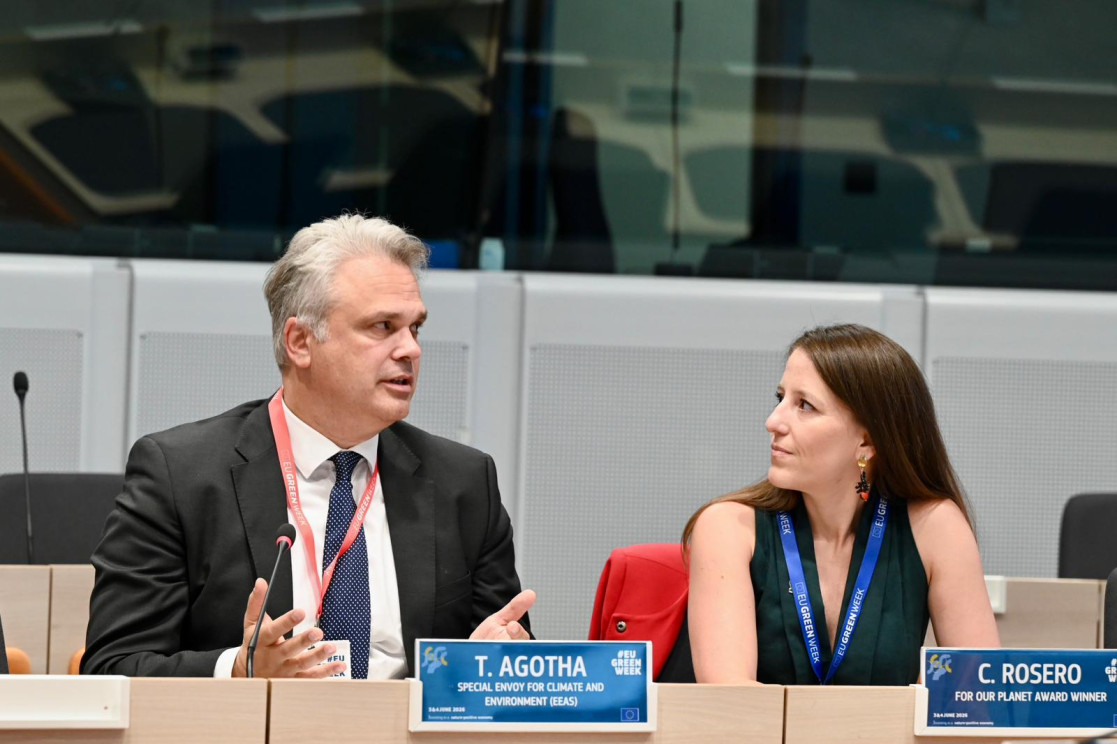
European Union, 2026
The EU Special Envoy for Climate and Environment, Anthony Agotha, engages the EU’s partners in international and bilateral meetings on the clean transition to benefit our planet, our economy, and our security. In November 2025, he attended the international climate conference COP30 in Belém, Brazil, on behalf of the EU, where he spoke with Indigenous People at the first-ever climate conference to take place in the Amazonas.
Women and girls are not only disproportionately impacted by climate change, but they are also powerful agents of change. They are on the frontlines of addressing climate change as leaders, community members and activists.
- EU Special Envoy for Climate and Environment, Anthony Agotha at at the panel “Towards a people-centered climate action: recognizing the role of women and girls of African descent” on 20 November 2025, Belem, COP30
Europe is staying the course on climate action. In the EU Energy and Climate Diplomacy Council Conclusions of 2026, EU foreign ministers affirm their commitment to the clean transition and to transition away from fossil fuels, as best strategy to break dependencies and protect a sustainable planet for all.
But the clean transition not only avoids greenhouse gas emissions – it also benefits competitiveness and security worldwide.
Europe as a reliable partner
The EU's partnerships matter more than ever In a world shaped by growing geopolitical instability. Through sustained diplomacy, cooperation and engagement, together with its partners around the world, the European Union works to strengthen security, support stability and defend the rules-based international order.
Follow the link to learn more about Europe's Offer and discover stories reflecting the core principle of EU foreign policy: lasting stability is built through reliable partnerships, shared interests, and cooperation that delivers for people both within Europe and beyond its borders.

#ForOurPlanet prize 2026
-
Image
European Union, 2026
-
Image
European Union, 2026
-
Image
European Union, 2026