
Mrs. Svay Rorn, farmer in Kampong Speu increases her profit from cricket farming
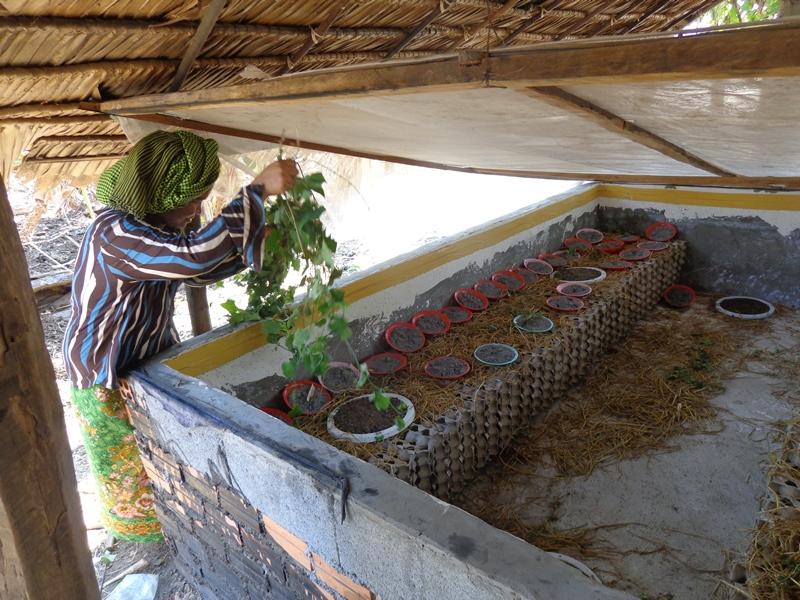
Mrs. Svay Rorn, 43, her husband and five children live in Kampong Speu province. The family depends on paddy farming for their livelihood; the harvests can only cover home consumption. In order to increase their income, the family started to grow vegetables in their home garden, from which they earn a small profit. To further improve their income, the family tried raising crickets, but without any proper training. This did not enable them to make a profit, despite their hard work. Rorn was not satisfied and hesitated to continue cricket raising. She felt a lack of knowledge and skill on cricket raising and management was holding her back from improving her situation.
In 2013, the European Union (EU) funded Community Forest Management and Livelihood Improvement (CFMLI) project was introduced in Rorn’s village. In partnership with Cambodian NGO Mlup Baitong, the project aimed to empower farmers in forest protection and improve their livelihoods. Rorn’s family was intrigued by the project’s purpose and decided to join a Self Help Group (SHG) of 13 farmers, Khum Prey Khmeng Roung Roeurng Agriculture Cooperative (AC), and Kiri Chhoung Roung Khla Community Forest (CF).
Rorn received a series of technical trainings, especially training on home gardening, cricket raising and value chain analysis. She also received a loan of USD 75 to develop her micro business. By applying simple but effective techniques for cricket raising, she managed to raise crickets in a hut of 4.5 square meters. The result was overwhelming, enabling her to earn an average of USD 100 per month. It is a valuable addition to her annual household income. With the increased income she was able to pay back her loan from the self-help group and improve her family's living condition.
With help from her family, Rorn spends most of her time working on the cricket farm. She is proud of her achievement: “I like this job because it is very easy to apply and I can do another work at the same time”, Rorn said. “I will encourage my villagers to start this small business because there is a good market for crickets. I can share my experience to any members interested in this business.. Before joining the project, we only had income from rice farming and traditional chicken raising, but now we have diversified income from cricket farming. This gives me extra income". By the end of the project period in December 2017, Ms. Rorn’s micro business has been running smoothly with the same average monthly earning. She has become more self-reliant with this new business, and less dependent on collecting non-timber forest products as before.