Counter-terrorism
In the face of a diverse and unpredictable threat of terrorism, the EU is focused on effectively countering and preventing terrorism and violent extremism. This page explains what the EU does to prevent and counter terrorism through diplomacy and external relations.
Navigate the topic
-
Image
 Copyright
European Union
Why it matters
Terrorist attacks across the world show the persistent and unpredictable threat of terrorism and violent extremism. This threat is diverse and geographically widespread.
The EU and its partners face multiple challenges, including radicalisation within local communities, the resurgence of groups like Al-Qaeda and Da’esh, and the rise of lone actors.
Emerging technologies, terrorists’ online propaganda, and politically motivated terrorism further contribute to this new wave of risks.
How does the EU tackle terrorism and violent extremism?
To counter and prevent terrorism and violent extremism, the EU pursues a whole-of-society approach that engages civil society and other non-governmental actors. This approach is grounded in respect for international human rights and humanitarian law, promoting the rule of law as the basis of sustainable counter-terrorism. A strong gender perspective is integrated throughout EU’s actions, including promoting women’s participation in law enforcement and mainstreaming the role of women and girls in both prevention and response efforts.
The European External Action Service leads on the international dimension of counter-terrorism, working closely with EU Member States in the Council Working Party on Terrorism (COTER), and coordinating with all relevant EU institutions. It leads outreach to partners and guides EU capacity building assistance to partner countries, ensuring coherence and efficiency.
The EU also builds strategic partnerships with multilateral and bilateral actors, conducts dialogues with partner countries, and strengthens their capacities to tackle terrorism and violent extremism. Priority areas include countering terrorism financing and tackling online radicalisation.
In addition, the EU can impose restrictive measures – such as asset freezes and travel bans – on individuals and groups involved in terrorist activities.
Learn more below.
International partnerships
Multilateral cooperation is central to the EU’s counter-terrorism approach. The EU works with international partners to coordinate responses in the fight against terrorism and prevention of radicalisation and violent extremism. This includes working closely with the UN – particularly with the United Nations Office of Counter-Terrorism (UNOCT), the Counter-Terrorism Committee Executive Directorate (UN CTED) and UN Global Counter-Terrorism Coordination Compact comprised of more than 40 UN entities.
Since September 2022, the EU has co-chaired theGlobal Counter-terrorism Forum (GCTF), a role extended through 2026, and has served on the governing boards of its affiliated institutions: Hedayah, the International Institute for Justice (IIJ), and the Global Community Engagement and Resilience Fund (GCERF).
Recognising the multifaceted nature of terrorism, the EU maintains a wide range of partnerships, including membership in the Global Coalition against Da’esh since its creation in 2014, leading also its Core Focus Group on Syria and Iraq with Germany, the US and the United Arab Emirates, and active engagement with NATO, Interpol, the OSCE, and the Financial Action Task Force (FATF).
-
Image
 Copyright
European Union
© European Union, 2021
-
Image
 Copyright
European Union
Counter-Terrorism Dialogues
The EU – led by the EEAS, with the close involvement of the EU Counter Terrorism Coordinator, the European Commission and the EU Justice and Home Affairs (JHA) Agencies – has established Counterterrorism Dialogues with key partner countries and multilateral organisations.
These dialogues serve as a platform for political outreach and coordination with a range of countries and institutions, including the United Nations, Australia, India, Pakistan, Türkiye, the United Kingdom, and the United States.
Helping our partners build capacity
The EU is one of the world’s most important providers of counter-terrorism capacity building and of programmes aimed at preventing violent extremism.
As of 2024, the EU has allocated around €659 million for projects around the world to counter terrorism, and to prevent and counter violent extremism.
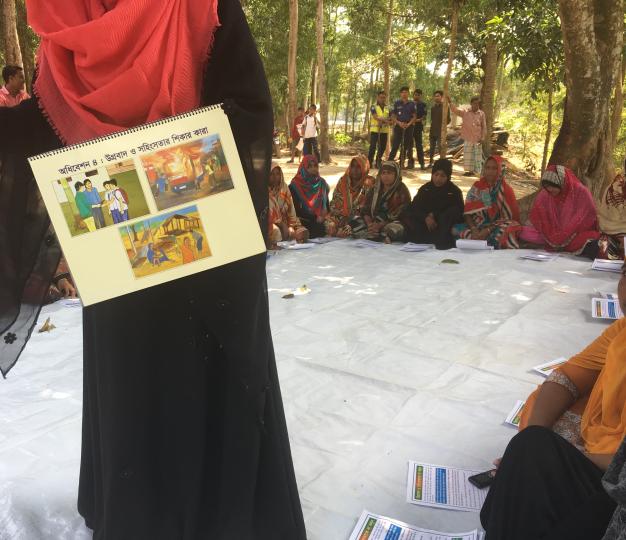
EU-funded activities
- help prevent radicalisation and recruitment, in prisons, but also online, in schools or communities
- combat the financing of terrorism and money laundering
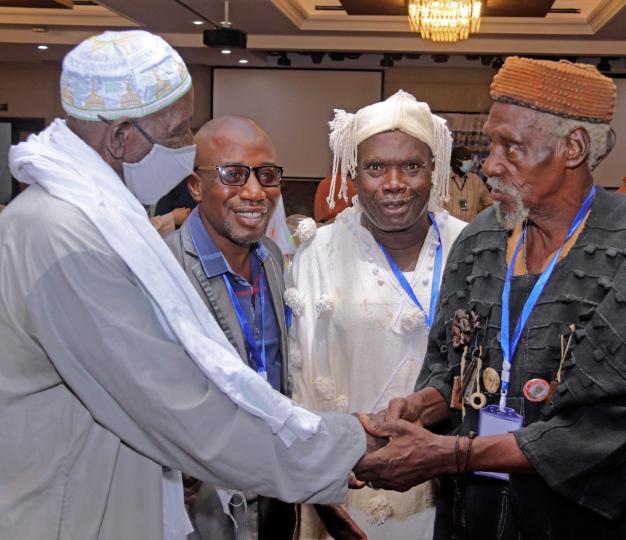
- help strengthen resilience of young people and communities against violent extremism
- promote peaceful reintegration into local communities
-
Image
© GCERF
Countering terrorism financing and online radicalisation
Countering the financing of terrorism is a key element of the EU’s counter-terrorism strategy and broader economic security approach.
The EU promotes international standards through the Financial Action Task Force (FATF), as well as the Global Counter-terrorism Forum, the Global Coalition against Daesh, the “No money for terror” conferences, and bilateral and multilateral dialogues. To safeguard the internal market, the EU’s legal framework helps identify high-risk third countries with strategic deficiencies in their Anti-Money Laundering and Countering the Financing of Terrorism (“AML/CFT”) regimes, based on their FATF evaluation. The EU also works with partner countries to provide technical assistance and build their capacity in this field.
To counter the use of social media and AI as tools for radicalisation, the EU also focuses efforts on tackling extremist narratives online. For example, the EU’s Internet Forum, launched in 2015, provides a cooperation framework for internet and the Artificial Intelligence industries to discuss and address challenges posed by malicious and illegal content online. The EU also supports international efforts, including the Global Coalition against Da’esh, the Christchurch Call and the Global Internet Forum to Counter Terrorism (GIFCT), to counter terrorist content and hate speech online.
The Counter-Terrorism/Security Experts’ Network
The EEAS manages the EU Counter-terrorism Experts’ Network, which celebrated its tenth anniversary in 2025. Established in 2015 in the wake of the Charlie Hebdo terrorist attacks, the Network strengthens cooperation, shares expertise, and enhances EU security.
Today, it is a key part of the EU’s toolbox for counter-terrorism.
- Over 60 experts have been deployed since its creation,
- with around 20 currently posted around the world.
- The experts support EU’s foreign policy development, multilateral engagement, and partners’ capacity building.
-
Image
© GCERF/M. Traore
-
Image
 Copyright
European Union
Special Envoy for Counter-terrorism
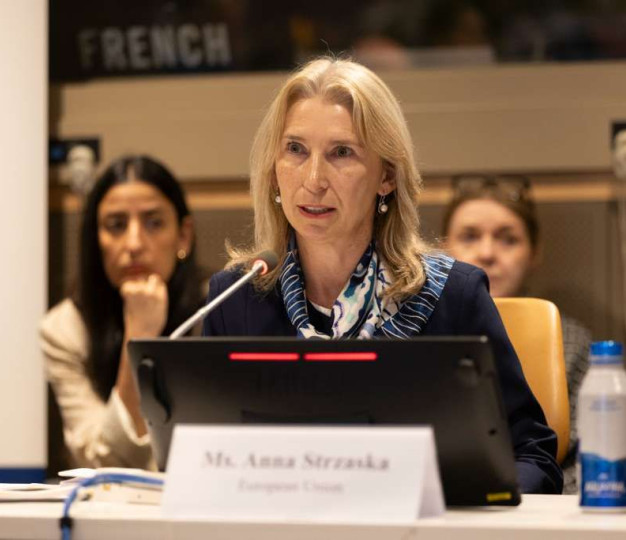
To strengthen EU multilateral engagement in Counter-terrorism and preventing and countering violent extremism, a Special Envoy for Counterterrorism was appointed in November 2023. Supported by the EEAS Counter Terrorism Division, the Special Envoy drives policy development and helps advance the EU’s role as a global security actor.
The Special Envoy
- shapes the EU’s toolbox to counter terrorism,
- co-chairs the Global Counter-terrorism Forum,
- leads dialogues with partner countries,
- helps coordinate and leverage EU funding, and
- oversees the Counter-terrorism Experts’ Network.
In all efforts, the Envoy promotes EU values, particularly respect for human rights and gender perspectives, in global counterterrorism fora.
Anna Strzaska currently serves as the EU Special Envoy for Counterterrorism.
Political framework

European Union
The Council of the European Union adopted its first Conclusions on counter-terrorism on 9 February 2015. They have since evolved in line with the changing threat. The most recent Council conclusions, adopted in December 2024, focus on strengthening the link between internal and external security. Together with the EU’s 2005 Counter-Terrorism Strategy and the European Agenda on Security, they form the foundation of EU engagement in counterterrorism.
The Strategic Compass for security and defence called for a stronger EU response to better prevent and counter terrorism. It called for further developing the EU’s toolbox for countering terrorism, stepping up engagement with strategic partners, such as the UN, the Global Counterterrorism Forum and the Global Coalition against Da’esh.
The EU’s Agenda on Counter-Terrorism, adopted in December 2020, reinforced the EU’s framework to anticipate threats and risks, prevent radicalisation and violent extremism, protect people and infrastructure, and follow-up after attacks. It also stressed the importance of partnerships with neighbouring countries to strengthen security within and beyond the EU.
At the global level, the United Nations Global Counter-terrorism Strategy remains central to ensuring compliance with internationally agreed norms and regulations. The EU coordinates the efforts of its 27 Member States during negotiations in New York to review the Strategy, playing a key role to ensure global values continue to be reflected. The last revision, in July 2026, was again an opportunity for the EU to play a pivotal role in promoting its principles and priorities.